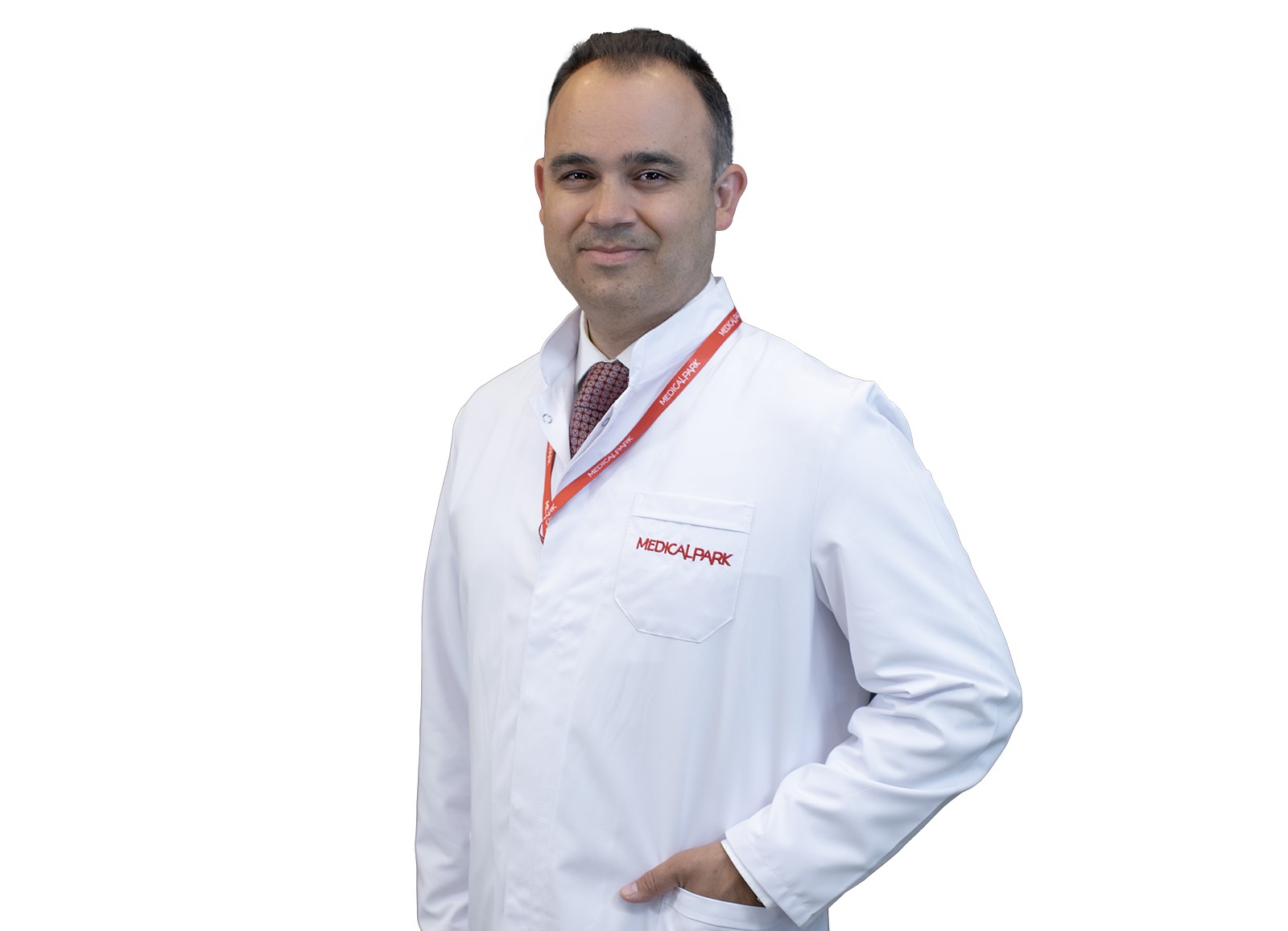
General Surgery Specialist Assoc. Prof. Dr. Nazmi Özer stated that 99 percent of breast cancer is seen in women and 1 percent in men and said, “Approximately 12 percent of women develop breast cancer throughout their lives. Early diagnosis and treatment provides the chance to completely cure breast cancer. For this reason, routine breast examinations and imaging tests are of great importance.”
Stating that approximately 12 percent of women may develop breast cancer throughout their lives, Medical Park Adana Hospital General Surgery Specialist Assoc. Prof. Dr. Nazmi Özer said, “Breast cancer is the most common type of cancer in women worldwide and the most common cause of cancer-related deaths. Breast cancer develops 90 percent from ducts (ductal cancer, carcinoma) or 10 percent from lobules (lobular cancer, carcinoma). Majorly, the anatomical structures called terminal ductal lobular unit (TDLU) in the structure of the breast are the areas where breast cancer develops.”
“It can be felt by manual examination”
Stating that breast cancers can usually be diagnosed by the patient noticing this mass in her breast and consulting a doctor, Assoc. Prof. Dr. Özer said, “Breast cancer is usually irregularly circumscribed and hard as wood masses that occur as a result of uncontrolled proliferation of the cells that make up the breast tissue. If it is large enough, it can be felt by palpation,” he said.
“It can be examined with ultrasonography and mammography”
Emphasizing that breast cancer can be followed up with breast ultrasonography under the age of 40 and mammography examinations in patients aged 40 and over, Assoc. Prof. Dr. Özer listed the symptoms as follows:
“Mass in the breast: It is the most common symptom of breast cancer. Breast cancers are painless, irregularly limited (lumpy), hard masses. Rarely, they are smooth-surfaced, soft and painful. In breast cancer, 33 percent of the masses are detected by the patient herself/himself.
Swelling in the breast: (in part or all of the breast) or asymmetry (although the mass is not palpable). This is what happens in invasive lobular carcinoma.
Dimpling: Dimpling means shrinkage of the breast skin. It is probably due to the tumor grasping and pulling on the cooper's ligament (bands of tissue) attached to the skin.
Nipple retraction: This is the inward collapse or rotation of the nipple. It is caused by breast cancer behind the areola invading the milk ducts leading to the nipple and the milk ducts pulling the nipple.
Nipple discharge: Especially bloody discharge.
Erythema (redness) or ulceration of the breast skin: Indicates invasion of the cancer into the skin.
Eczema, itching and watering of the nipple and areola: Occurs in Paget's disease of the breast.
Orange peel appearance (peau d'orange): Inflammatory breast cancer or other locally advanced breast cancers. It is due to involvement of the lymphatic network. The skin of the breast is edematous, the depressions are caused by sweat gland ducts that cannot extend and pull the skin.
A mass in the armpit: It depends on cancer spread to the armpit lymph nodes.”
“Treatment of breast cancer depends on the stage of breast cancer”
Referring to the treatment methods in breast cancer, Assoc. Prof. Dr. Özer listed the methods that can be applied according to the stage of the disease as “surgical treatment, radiotherapy, chemotherapy, hormonotherapy (hormone therapy), smart drugs”.
“Early diagnosis and treatment provides the chance to cure breast cancer completely”
Speaking about the surgical techniques applied in breast cancer, Özer listed the surgical techniques as follows:
“Breast-conserving surgery, breast conservation, Skin-sparing mastectomy, Nipple-sparing mastectomy, Simple (total) mastectomy, Extended simple mastectomy, Modified radical mastectomy, Radical mastectomy, Lymph node surgery, Sentinel lymph node biopsy (SLNB), Axillary lymph node dissection (ALND).”
“Early diagnosis is important”
“Today, breast surgeries are performed in accordance with the principle of minimally invasive surgery (small incision, less tissue removal, early recovery),” said Assoc. Prof. Dr. Özer, ”Early diagnosis and treatment provides the chance to cure breast cancer, that is, to treat it completely. For this reason, routine breast examination and imaging examinations are of great importance.”
İHA Haber Kodu: 20241030AW318793