“Artificial intelligence and laser technologies make a difference in the treatment of eye diseases”
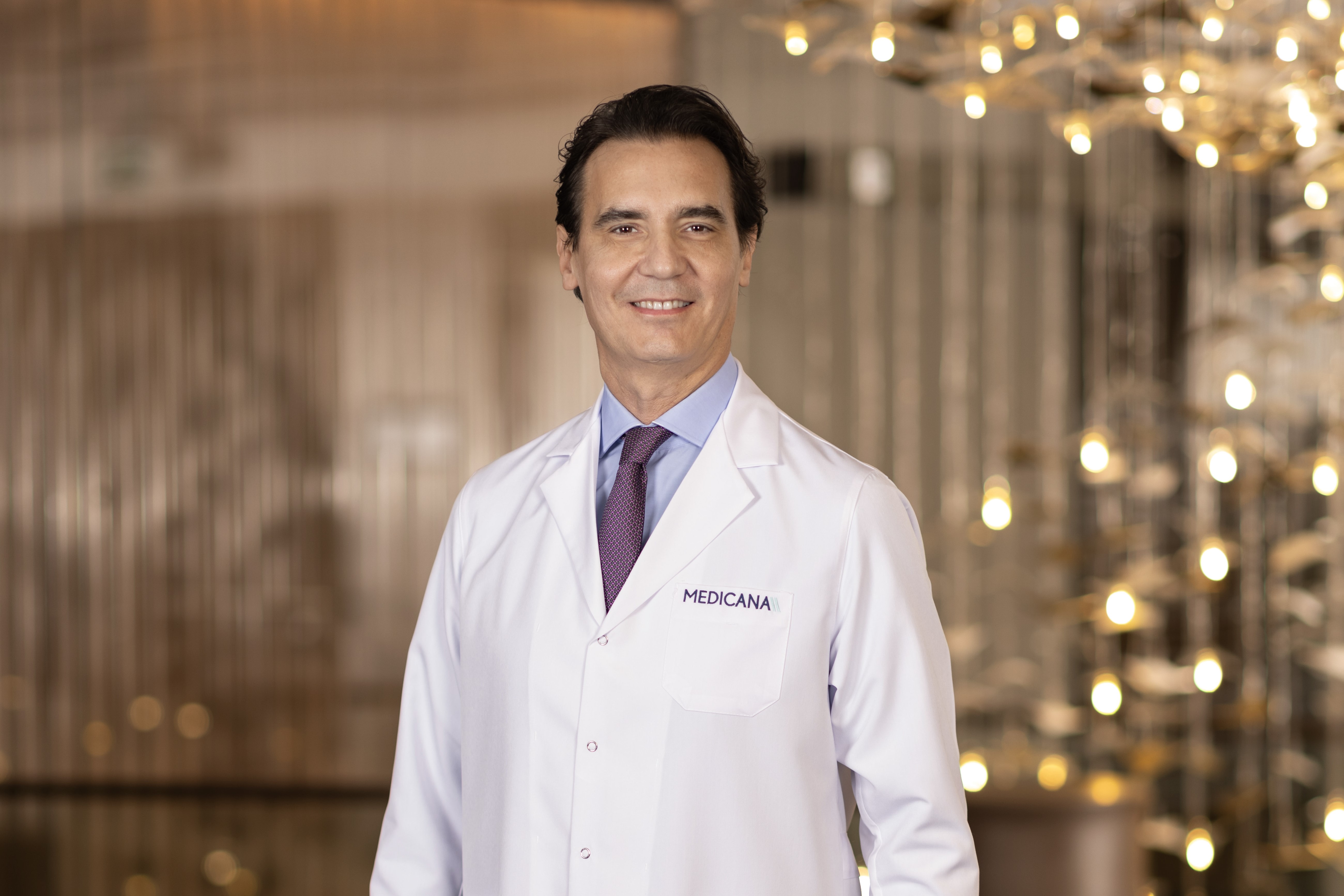
Vision helps us to explore the world and gain knowledge. Protecting eye health is vital for the continuity of vision. Assoc. Prof. Dr. Efekan Coşkunseven from the Department of Eye Health and Diseases said, “Deterioration of vision makes daily life difficult and prevents independent movement, so the quality of life of the person is seriously affected. Developments such as artificial intelligence and laser technologies make a difference in the treatment of eye diseases.”
Significant technological advances have been made in the treatment of eye diseases in recent years. These innovations make treatment processes more effective, faster and patient-friendly. In addition to computer-assisted laser treatments, artificial intelligence has started to be used in both the diagnosis and treatment of eye diseases. In Turkey, new technologies in eye diseases are followed in parallel with the developments in the world. From the Department of Ophthalmology at Medicana Zincirlikuyu Hospital. Assoc. Prof. Dr. Efekan Coşkunseven emphasized the importance of developing technologies and added the following:
“Devices with advanced technology such as eye topographers can evaluate all possibilities and reveal the most accurate result, just like artificial intelligence does. In the past, a decision used to be made by looking at a picture, but now the devices can find the thinnest point of the cornea while looking at this picture, and then find out how much difference this thinnest point is from the other thickest point. It compares the patient's eye numbers, age and other people of the same age and produces a refined result. In the light of all this information, it can obtain a certain numerical value and find the patient's risk measure and say that this patient is risky for kerataconus. Whether the patient has kerataconus or not is of great importance in laser eye surgery. This device plays a critical role in the diagnosis of various eye diseases, treatment planning and surgical operations.”
Iris recognition technology
Assoc. Prof. Dr. Efekan Coşkunseven stated that laser technologies, which have an important place in the treatment of eye diseases, previously only followed the eye but could not follow the rotation of the eye around its own axis and said the following:
“Now iris recognition technology has become such that the device is locked to the eye and rotates with the eye. Thus, astigmatism can be treated successfully. In the past, surgery was performed by entering only the patient's spectacle numbers, that is, only the patient's spectacle numbers could be corrected. Eye Numbers are formed as a result of the length of the anterior - posterior diameter of the eye, the refractive power of the lens and the refractive power of the cornea. In laser operations, surgery is performed using all these data, after which patients can get rid of their glasses. Aberrations in the eye (problems of light scattering in the eye) can also be corrected with laser operations. In the past, astigmatism treatments were the most difficult treatment because the rotation of the eye around its axis could not be detected, now astigmatism treatments up to 6 degrees can be performed. Again, in cataract surgeries, 20 years ago, the cornea was cut 7-8 millimeters, the cataract was removed and stitched. The patient would be hospitalized for 4-5 days. Now, the patient arrives in the morning, blood tests are taken, the patient undergoes surgery, and the patient can leave the hospital with his/her eyes open after the surgery.”
Femtosecond laser method in cataract surgeries
Giving information about femtosecond laser technology, which is one of the current methods in cataract treatment of eye diseases, Assoc. Prof. Dr. Coşkunseven said the following:
“Femtosecond laser is one of the most up-to-date methods that allows incisions to be made more precisely in cataract surgery. In this technology, the device takes 3D pictures of the patient's eyes. Within seconds, the corneal incisions and the cutting of the anterior capsule of the lens are made close to perfect, in the right location, in the right diameter, while the capsule is marked by the laser in the patient's astigmatism. Especially in hard cataracts, the cataract is cut into cubes by the laser and the phacoemulsification method performed after the laser ensures that less energy is used. Within seconds, the patient is taken to the department where the cataract fragments are cleaned with the phacoemulsification method and the lens is inserted into the eye after the corneal entry with the Femtosecond laser method, the capsule is cut as desired, and the cataract is broken up.”
Stating that the patient does not feel any pain during this process, Assoc. Prof. Dr. Efekan Coşkunseven said, “Femtosecond laser increases the success of the surgery by making millimeter calculations and provides comfort to both physicians and patients. Intraocular lenses are also innovative solutions that have developed in recent years and aim to improve the quality of vision of patients. Lenses implanted into the eye during cataract surgery can not only treat cataracts but also improve distance and near vision. Multifocal (Edof or trifocal) lenses provide clarity in both distance and near vision, reducing the need for glasses. These technologies aim to improve the quality of life of patients while allowing eye diseases to be treated more effectively.”
İHA Haber Kodu: 20240917AW288971