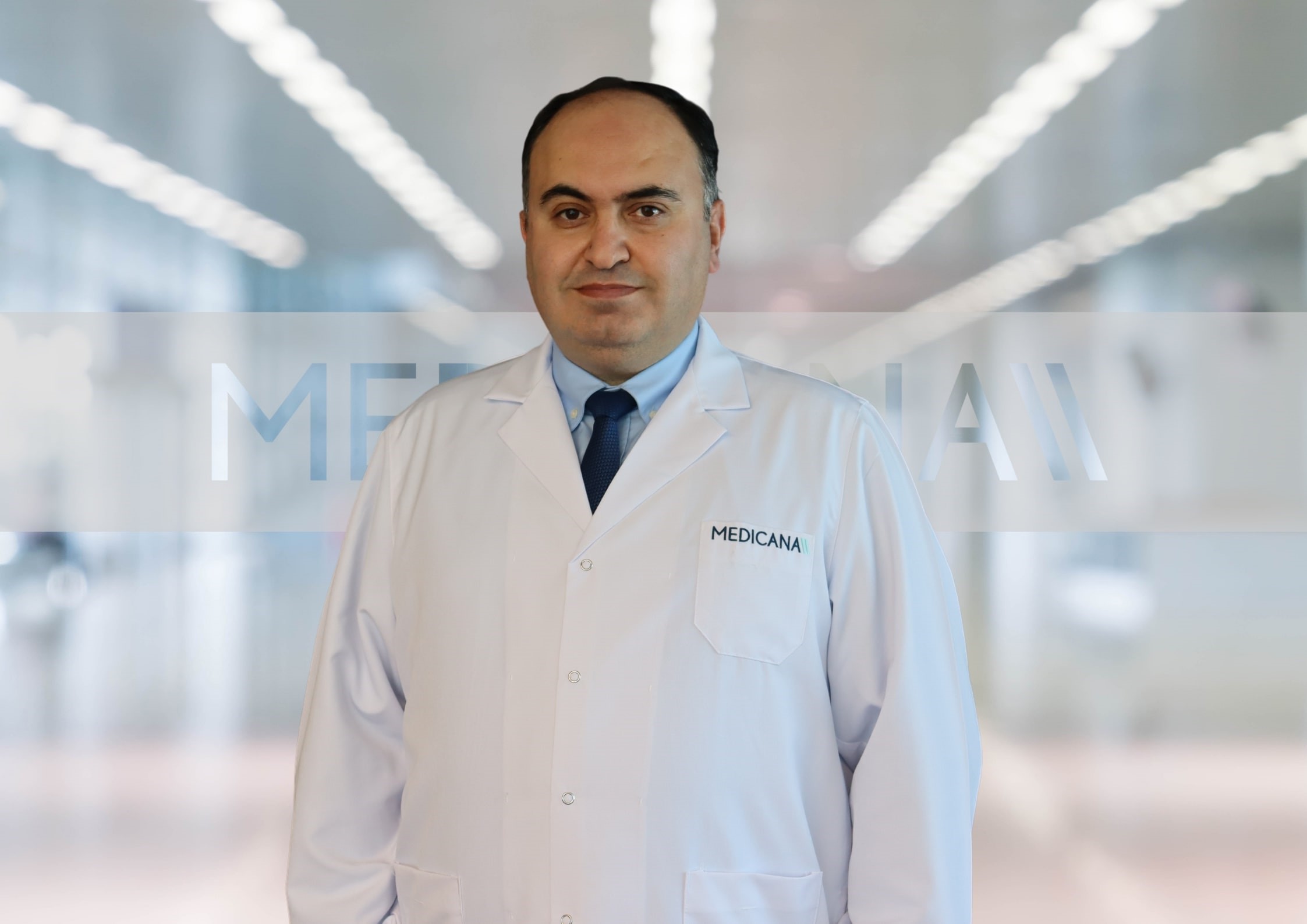
Breast cancer, which ranks second after lung cancer in terms of incidence worldwide, is by far the first in women's cancers. Stating that advances have been made in the diagnosis and treatment of breast cancer with advances in technology, Medical Oncology Specialist Assoc. Prof. Dr. Mehmet Metin Şeker said, “Artificial intelligence applications have started to be used in the field of oncology. In the future, artificial intelligence will be able to determine the most appropriate treatment for patients.”
While more than 2 million women in the world are diagnosed with breast cancer every year, approximately 20 thousand women in our country are diagnosed with breast cancer every year. Medicana International Ankara Hospital Medical Oncology Specialist Assoc. Prof. Dr. Mehmet Metin Şeker listed the risk factors that cause breast cancer.
Female gender and advanced age are the most important risk factors
Explaining the cause of breast cancer as the transformation of the cells in the breast into cancer over time as a result of prolonged exposure to estrogen, Assoc. Prof. Dr. Mehmet Metin Şeker said, “The most important risk factors for breast cancer are being a woman and advanced age. Apart from gender and age, genetic status is also a very important factor. Apart from these, obesity, lack of physical activity, nutrition, alcohol and cigarette consumption, pregnancy and breastfeeding are among the reasons that affect the risk of breast cancer.”
Use of artificial intelligence applications in oncology on the rise
Pointing out that with the rapid development of technology, the use of artificial intelligence applications in oncology is gradually increasing, Assoc. Prof. Dr. Mehmet Metin Şeker said, “The best example of this; With computers with artificial intelligence and deep learning capacity, mammograms and pathologies can be evaluated with a very high accuracy rate and breast cancer can be diagnosed at an early stage. Although it is not possible today, artificial intelligence will soon be able to determine the most appropriate treatment drug for patients and it will also be determined whether the patient benefits from the treatment.”
Those with a family history of breast cancer should be screened at an earlier age
Reminding that 1 out of every 8 women has the risk of developing breast cancer during her lifetime, Assoc. Prof. Dr. Şeker also underlined that early diagnosis of breast cancer is very important, as patients who are diagnosed early can be treated more easily and the results are much better. For this purpose, Assoc. Prof. Dr. Şeker noted that all women from the age of 40 are screened with mammography once a year in our country as in the whole world, and stated that screening can start at an earlier age in those with a family history of breast cancer or those with a high genetic risk, and that methods such as ultrasound and MRI can also be used.
Tumor stage, pathology and hormone receptors are decisive in treatment
Stating that the methods used in the treatment of breast cancer can be classified as surgery, radiotherapy, hormonal therapy and chemotherapy, Assoc. Prof. Dr. Mehmet Metin Şeker continued his speech as follows:
“The most important criteria in deciding which treatment method to choose and how the correct sequence will be are the stage of the disease and the estrogen receptor, progesterone receptor and HER-2 score determined as a result of pathology examination. For this reason, it is very important that patients are evaluated by a medical specialist, radiation oncologist and general surgeon before treatment for the most accurate treatment plan specific to the patient.”
High carbohydrate foods and saturated fats should be avoided
“Since the 1950s, it has been known that hormones, estrogen and progesterone, play an important role in the development of breast cancer,” said Assoc. Prof. Dr. Mehmet Metin Şeker, ”Therefore, reducing the level of these hormones or their activity in breast tissue is very important in treatment. Just like medications, nutrition also affects estrogen and progesterone levels. High-carbohydrate foods, especially high-fat foods rich in saturated fatty acids, and foods high in salt increase the risk of breast cancer and should be avoided. Foods such as soy and flaxseed also contain phytoestrogens. There are conflicting results on breast cancer in studies conducted with these foods. It is considered appropriate for patients with breast cancer to avoid these foods in order to stay within the safe limit.”
Underlining that regular physical activity also positively affects the hormone profile and has a protective effect against breast cancer and many other types of cancer, Assoc. Prof. Dr. Şeker stated that the combination of healthy nutrition and regular physical activity provides patients with a benefit almost close to chemotherapy.
Stating that with the advancement of technology and learning the genetic structure of cancerous cells, it has become possible to make drugs that directly target cancerous tissues, Assoc. Prof. Dr. Şeker emphasized that drugs that are more effective in treatment and have fewer side effects are produced.
İHA Haber Kodu: 20241004AW300938