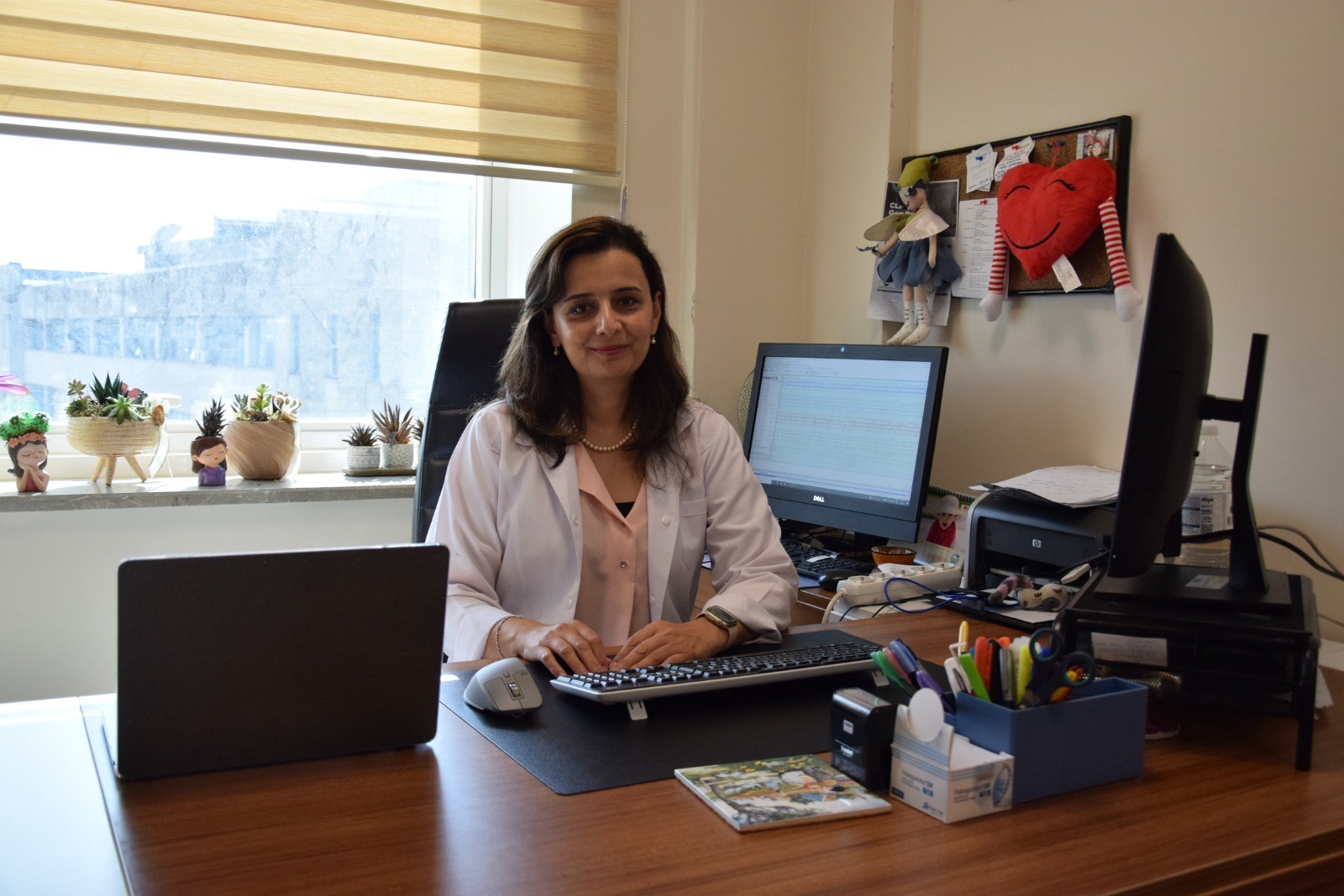
Assoc. Prof. Dr. Sevim Türay said that in order to be diagnosed with epilepsy, a person should have more than one recurrent seizure and that epilepsy cannot be diagnosed with only one seizure.
Düzce University Faculty of Medicine, Department of Pediatrics, Department of Pediatrics, Division of Pediatric Neurology Faculty Member Assoc. Prof. Dr. Sevim Türay gave information about the symptoms, diagnosis and treatment of epilepsy in children. Stating that epilepsy is a disease characterized by recurrent seizures, Türay said, “Seizures are temporary changes in the consciousness and / or movements of the person that occur in the brain cells as a result of an abnormal, strong and rapid electrical current. Having a seizure can be due to epilepsy disease, but it can also be due to various reasons. For this reason, epilepsy is not diagnosed by having a seizure only once.”
Underlining that a person should have more than one recurrent seizure in order to be diagnosed with epilepsy, Assoc. Prof. Dr. Türay emphasized that if a person has had a seizure once, it is necessary to detect findings related to epilepsy in EEG and brain MRI examinations in addition to seizures.
“Epilepsy is a Brain Disease”
Stating that epilepsy is a brain disease, Sevim Türay said, “Epilepsy can develop both due to environmental factors, genetic effects, and as a result of other diseases of our body affecting the brain. Epilepsy can occur for many different reasons affecting the brain. We can summarize these conditions under two main headings: The first is epilepsies where the underlying cause can be identified; due to a structural or congenital disorder in the brain, tumors, brain damage, injuries caused by accidents or bleeding, and those due to unknown causes and genetic inherited epilepsies.”
“One out of every hundred children has epilepsy”
Pointing out that epilepsy is one of the most common neurological diseases, Assoc. Prof. Dr. Türay said, “Epilepsy is most commonly observed in children under the age of 1 and individuals over the age of 65. The incidence of epilepsy in the whole society is five per thousand and one percent in childhood. In other words, one out of every hundred children has epilepsy. Some types of epilepsy have a genetic origin. If one of the parents has epilepsy, the rate of epilepsy in their children may increase to approximately six percent.”
How can we recognize when a child has an epileptic seizure?
Stating that epilepsy seizures can be seen in the form of large seizures as well as small seizures by the society, Türay said, “There may not be loss of consciousness in every epilepsy seizure, some seizures can only be seen during sleep.” Sevim Türay stated that during large seizures, the patient loses consciousness, convulsions in the arms and legs, then convulsions, followed by deep and wheezing breathing, “Foam may come from the mouth, the patient may bite his tongue, urinary incontinence and bruising may occur on the lips, face and hands. This seizure, which lasts for 1-3 minutes, is very frightening for the family. These seizures may be followed by sleepiness.”
Stating that families may recognize small seizures late or not at all, Assoc. Prof. Dr. Sevim Türay listed the symptoms of common small seizures as follows: “Blank staring in the eyes, diving seizures that occur in the form of eye fixation, confused looking at the environment or together, lying swallowing movements, shaking, throwing or momentary contraction in the arms and legs, turning the head and eyes to one side, sudden short-term throws in the face or body, sudden falls forward or backward in the head or the whole body, folding the head and arms forward and inward (jumping) spasm-shaped seizures can be counted.”
Emphasizing that it would be very useful for the parents to observe the seizures carefully in order to provide sufficient information to the doctor, Child Neurology Specialist Assoc. Prof. Dr. Türay said, “It is very important for us to diagnose the seizures on video. Sometimes some benign movements seen in childhood may be mistakenly mistaken for seizures by the family. These videos will help the doctor a lot in distinguishing them.”
“Early diagnosis and treatment is very important”
Stating that 60 to 70 percent of epilepsy patients respond well to drug treatment and can be controlled with a single drug, Assoc. Prof. Dr. Türay said, “Most of these patients recover completely after 2-3 years of drug use. These rates are higher in children than in adults. Some patients continue drug treatment for life. In some patients, seizures can only be controlled by using more than one drug together and sometimes they cannot be controlled. Some treatment options such as ketogenic diet, use of steroids and intravenous immunoglobulins, cannabinoids, surgical treatment may be considered in these types of epilepsies where seizures cannot be controlled. Early detection and control of seizures is very important. Ongoing severe seizures may slow down the neurological development of the child and affect developmental stages. It may impair school success and perception. In addition, life-threatening risks may occur in recurrent large seizures that are not under control. Therefore, early diagnosis and treatment is very important.”
Sharing information about what to do during an epilepsy crisis, Assoc. Prof. Dr. Türay said, “First of all, it is essential to be calm. Frequent practices such as pulling, dragging, wetting the face, slapping, applying cologne by panicking the patient do not provide any benefit. The patient should be gently placed on the ground to prevent injury. Sharp and pointed objects around him/her should be removed and if he/she has glasses, they should be removed. It is important to give the patient a side lying position to ensure that the respiratory tract is open and the secretions in the mouth do not escape into the lungs. During a seizure, wait for the seizure to end spontaneously and monitor the duration of the seizure. Some seizures may not have contractions. It is important for diagnosis and treatment that you can describe what is happening in your patient. Ask other people around you to take a video recording to show to the doctor. If there is something wrapped around the neck, remove it, do not block or try to stop the movements. You may cause dislocations of joints, fractures of long bones and injuries. Do not try to open the mouth, do not put anything in the mouth. Since the jaw muscles are tightly closed, you cannot open the mouth by inserting your finger during a seizure. However, if there is food, try to remove it. If breathing becomes difficult, try to move the lower jaw to help the patient breathe. The patient may bite his/her tongue during a seizure; to prevent this, do not put objects such as fingers or spoons into his/her mouth. In this case, if the mouth opens spontaneously, you can gently insert a twisted fabric in between. Do not immerse in water during a seizure. If the patient has a fever, you can wash him/her with warm water after the seizure has ended and he/she has recovered. It may take time for the patient to recover after a seizure. There may be dizziness and confusion. Do not leave his/her side until he/she is completely conscious. He may want to rest or sleep. Most seizures end in 1-2 minutes. If the seizure lasts longer than 3 minutes, if the seizures recur over and over again, if the patient has breathing problems even though the seizure has stopped, if the patient's post-seizure drowsiness lasts longer than 1 hour, if an injury occurred during the seizure or if a seizure occurred after the injury, if the person with the seizure has diabetes, seek emergency help,” he added.
“The child should not cause anxiety, should not be overprotective and restrictive”
Giving advice to the families of children with epilepsy, Assoc. Prof. Dr. Türay said, “First of all, it is necessary to make the patient feel like a normal child. You should not make the child anxious, overprotective and restrictive. Make him/her feel that there is a cure for his/her illness and that he/she will get better if he/she uses his/her medication. It is important to cooperate with the child's teachers to ensure that the child receives supportive education in the areas in which he/she is deficient and to develop the areas in which he/she is talented. If his epilepsy persists into adulthood, he cannot do some professions. But (in consultation with your doctor) there are many sports activities that you can do and many professions that you can have in the future. There are many famous people with epilepsy who have made a great contribution to the world. For your child to have a profession, to start a family, to have children, to live a normal life, it is enough to support him/her and make him/her feel that you are always with him/her.”
İHA Haber Kodu: 20240904AW280981