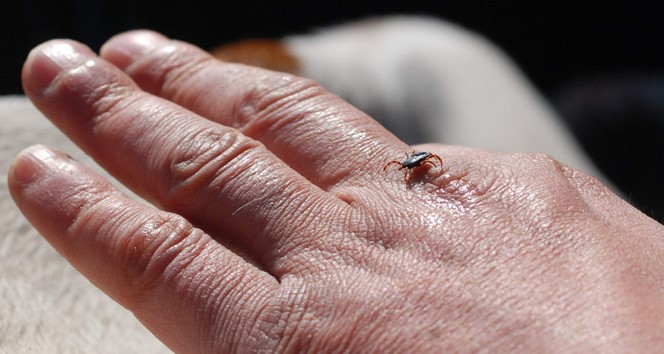
Dr. Muhammet Lütfi Yazıcı, one of the physicians of Erzurum Provincial Directorate of Health, stated that Crimean-Congo Hemorrhagic Fever disease can occur after an incubation period that can last 1-14 days depending on the way the virus is taken, and said, “In case of transmission by contact with infected blood and body fluids, this period can be 5-6 days, maximum 13 days. Symptoms of the disease include weakness, loss of appetite, fever, body pain, headache, nausea, vomiting, diarrhea. In the progressive period, skin bleeding, bleeding gums, nosebleeds, gastrointestinal bleeding and cerebral hemorrhage are observed on the third or maximum seventh day of the disease in almost three quarters of all cases.”
“Clothes that cover the body should be worn”
Explaining that mortality rates due to the disease can reach 30-50% in general, Yazıcı said, “The most common cause of death is organ failure (heart, brain, liver, kidney, lung), intracerebral hemorrhage and other internal bleeding. When going to areas such as fields, gardens, forests and picnic areas, clothes that cover the body as much as possible should be worn to prevent ticks from entering the body, long-sleeved sweaters or shirts, long-legged pants, long socks and boots should be preferred, and clothes should be checked regularly for the presence of ticks. When the person returns from risky areas, he/she should check his/her body and the bodies of his/her children, if any, for ticks, especially behind the ears, armpits, groin and behind the knees, and if the tick is attached, he/she should remove it with a suitable material by grabbing it from the closest place where it is attached to the body, provided that it is not touched with bare hands without wasting any time. Since the disease proceeds asymptomatically in animals, animals in areas where the disease is frequently seen can transmit the disease even if they look healthy. For this reason, the blood, body fluids or tissues of animals should not be touched with bare hands.”
“Ticks should not be killed with bare hands”
Prof. Dr. Muhammet Lütfi Yazıcı, Erzurum Provincial Health Directorate Public Health Bulletin, said, “Those who are engaged in animal husbandry in the regions where the disease is seen should use protective equipment such as gloves and goggles. Another important point in the fight against the disease is to spray the fields with appropriate chemical drugs in order to control the number of ticks in the regions where the disease is seen. Since the disease can be transmitted through the blood, body fluids and excretions of people infected with the disease, people in contact with the patient should take the necessary protection measures. Ticks attached to the body or found on animals should never be killed or burst with bare hands. Pouring substances such as cigarettes, cologne, kerosene on ticks should not be done because it will cause the tick to contract and transfer its body contents to the person whose blood it sucks. If you experience severe headache, shortness of breath, heart palpitations, vomiting, muscle aches or paralysis in any part of your body after a tick bite, it is vital to contact a health institution immediately.”
What is Crimean-Congo Hemorrhagic Fever?
In the statement made by Erzurum Provincial Health Directorate, “Crimean-Congo Hemorrhagic Fever is a disease from the group of viral (virus-induced) hemorrhagic (hemorrhagic) fevers and has recently gained importance due to the occurrence of hundreds of cases in our country. Caused by a virus carried by ticks, it is a disease transmitted from animals to humans that can cause fever, weakness, loss of appetite, muscle pain, headache, nausea, vomiting, diarrhea and bleeding in severe cases and can cause death if left untreated. It is often transmitted by tick bites. The disease can also be transmitted by unprotected contact with the blood and body fluids of sick people or infected animals. Ticks, which are the carrier, storage and transmitter of the microbe that causes the disease, are arthropod animals that do not fly, jump, and climb the body by walking on the ground.”
İHA Haber Kodu: 20240813AW266148