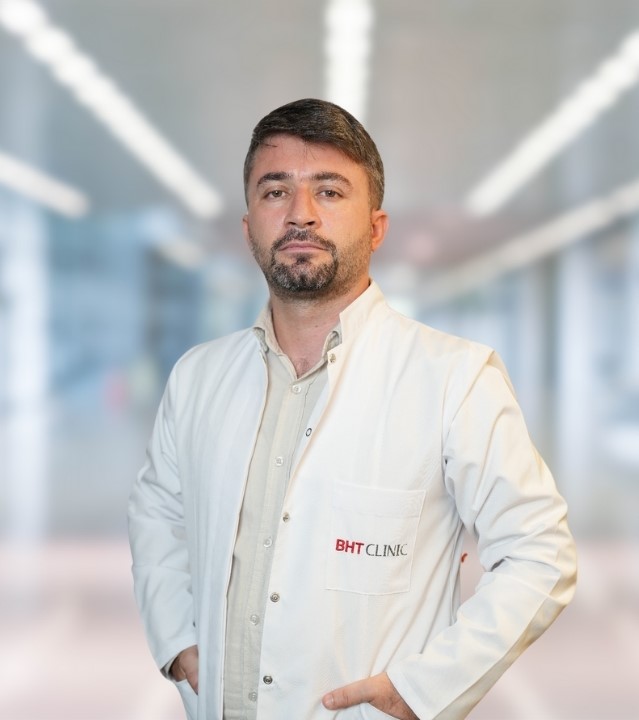
Kidney stones are formed when minerals such as calcium and oxalate in the urine cluster in the form of crystals. In fact, kidney stones are the result of abnormal excretion or absorption of minerals in the body. Stating that the diagnosis of kidney stones usually starts with a good anamnesis and physical examination, Urology Specialist Op. Dr. Abubekir Böyük, in the physical examination, the pain felt when hitting the lumbar-back area called costovertebral tenderness and suddenly increasing pain may be a sign of kidney stones. He stated that laboratory tests and radiological imaging methods are used to make a definitive diagnosis.
Tomography is the gold standard in diagnostic methods
Speaking about diagnosis and treatment, BHT CLINIC Istanbul Tema Hospital Urology Specialist Op. Dr. Abubekir Böyük stated that ultrasound is the first preferred method for imaging kidney stones because it does not contain radiation and is safe. He stated that it is preferred as the first choice especially in children and pregnant patients; however, it may be insufficient to show ureteral stones. X-ray can be helpful in visualizing opaque stones, but is not often preferred because it does not provide clear information about the size and anatomy of the stone. Computed tomography is the gold standard method in the evaluation and diagnosis of stone patients. Computed tomography provides details such as the location, size, hardness and density of the stone. It is important to perform before surgical planning, and it is especially helpful in determining the location of the stone and its relationship with neighboring organs. Although older devices may have high radiation exposure, new generation devices provide imaging with lower doses of radiation.”
Personalized treatment for kidney stones
Emphasizing that the treatment of kidney stones varies depending on factors such as the patient's age, current health status, medications (blood thinners, etc.) and the size of the stone, Dr. Böyük stated that ESWL (stone crushing with sound waves) method can be applied for stones smaller than 2 cm. This method allows the stones to be broken with the help of sound waves without the need for anesthesia and is generally safer, easier and more cost-effective than surgery. However, he underlined that it would not be suitable for patients taking blood thinners. He emphasized that only ultrasonic devices that do not emit radiation can be used in pregnant patients, but old ESWL devices cannot be used.
Stating that another method is endoscopic (closed) surgery with the help of URS (ureterorenoscope), Dr. Böyük said, '' He stated that with this method, the stones are entered through the urinary tract with the help of a camera and the stones are broken with a laser in the urinary canal or kidney. He said that the stones are usually dispersed like sand or broken into small pieces in a size that can be dropped by the patient in normal ways; large pieces can be removed with special tools.
Flexible URS is a bendable version and is generally preferred for stones smaller than 2 cm, Dr. Böyük said, adding that larger stones may require more than one session. Percutaneous nephrolithotomy (PNL) is preferred for stones larger than 2 cm or in cases that cannot be treated with other methods. In this method, a small incision of about 1-1.5 cm is made in the back and a tube is inserted into the kidney. A camera device called a nephroscope is placed inside and the stones are broken down with a laser and taken out.
Drink 2.5-3 liters of water a day and follow a proper diet
Finally, Dr. Böyük explains that excessive sweating and insufficient fluid intake during the summer months can reduce the amount of water in the urine and increase the ratio of salt and minerals. This increases the density of urine, leading to the formation of crystals (popularly known as sand), which can eventually turn into stones. If there are no health problems that restrict fluid intake, drinking 2.5-3 liters of water a day and following a proper diet helps prevent kidney stone formation. It is important for patients with a history of kidney stones to have regular check-ups at 3-6 month intervals, he concluded his speech by saying.
İHA Haber Kodu: 20240823AW272838