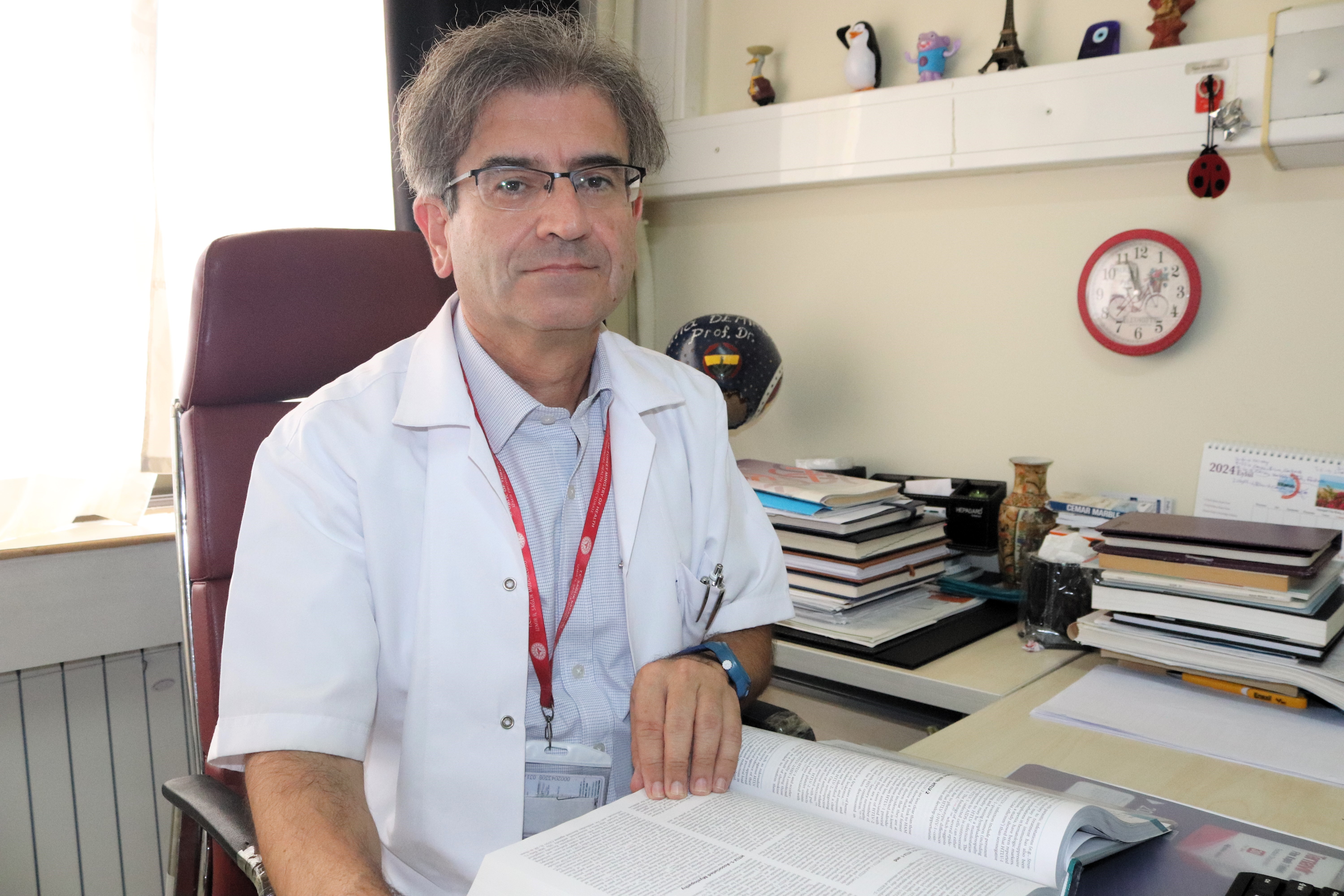
Stating that infectious diseases pose a threat in crowded environments, especially in schools as the weather starts to cool down, Prof. Dr. Tuna Demirdal said, “The main cause of bacteria is airless environments. Toys in kindergartens, door handles and desks in classrooms must be cleaned with detergent and water. If these conditions are followed, we will see fewer diseases.”
With the arrival of winter, infectious diseases have started to pose a threat to children, especially in schools. Thus, the question 'are these bacteria becoming more pathogenic with the arrival of winter and the cooling of the air? Prof. Dr. Tuna Demirdal, Head of the Department of Infectious Diseases at İzmir Katip Çelebi University Atatürk Training and Research Hospital, pointed out that this is not the case and that the main cause of bacteria is being in crowded and stuffy environments.
“Classrooms should be ventilated, children should wash their hands”
Prof. Dr. Demirdal, who warned that the classrooms should be ventilated frequently in schools, recommended that children wash their hands before and after the toilet, and if they eat lunch there, they should wash before and after the meal and that these conditions should be strictly followed.
“Infections can enter through the nose and reach the lungs”
Stating that there is a physiological change when the weather gets colder, Demirdal continued his words as follows:
“Especially respiratory infections can reach the lungs starting from the nose through the nose. In cold weather, the structures we call the protective epithelium in our nose may not fully function. For this reason, the possibility of microorganisms, which we call bacteria from the outside, to cause both upper respiratory and lower respiratory tract infections increases a little more.”
“Toys, door handles and desks in classrooms should be wiped”
Pointing out that families also have important duties to protect against infections, Demirdal said, “Children can hug each other and play with toys together. At the end of that day, in kindergartens with toys, the toys must be cleaned and wiped with detergent and water. Door handles and desks in classrooms must be cleaned with soap and water. If these conditions are followed, we will see fewer diseases. But it is not possible to prevent it completely,” he said.
“Mask” recommendation in crowded environments
Stating that the mask was a little repulsive during the pandemic period, but as a result, it protects, Prof. Dr. Tuna Demirdal said that since there is no pandemic at the moment, they cannot recommend 'wearing a mask', but he suggested that adults, teachers, especially in workplaces and schools, can use masks in order not to spread viruses and bacteria around in cases such as sneezing. Continuing his words, Prof. Dr. Demirdal also stated that it may not be very good to force children to wear masks.
“Children should not go to school if they are very sick”
Underlining that it is important to give handkerchiefs to children in classrooms, Demirdal suggested that the child should use this handkerchief when sneezing and then wipe their hands. Continuing his explanations, Demirdal said, “If these are paid attention to, these infections will definitely be seen less. If children are very sick, they should not come to school. Because they can infect others. They can rest at home for a few days and get a report from the doctor. But in mild infections, there is no need for them to stay behind from school.”
'High fever' warning
Stating that it is an important symptom if children have a high fever, Prof. Dr. Demirdal said that sometimes a mild fever occurs and it can fall spontaneously during the day. However, Prof. Demirdal warned that if the child has a fever that does not go down, if the child does not feel well enough to stand up, if he/she cannot feed and take food, he/she should definitely consult a doctor, and in this case, he/she recommended both taking medication and resting.
“Fruits containing vitamin C have been found beneficial”
Noting that there have been studies in the past that vitamins are especially beneficial for faster recovery of viral infections, Demirdal said that fruits containing vitamin C are also beneficial.
“Children should change their undershirts when they sweat”
Stating that especially children play running and sweat during the breaks, Demirdal finally gave the following sentences:
“It may be useful for children to change these undershirts when they sweat. Because hot-cold transitions especially negatively affect body resistance. Due to the negative effect, viruses and bacteria taken from outside cause infection more easily. It is a situation that affects not only children but also adults. It is useful for children to wear something extra like a sweater.”
İHA Haber Kodu: 20240920AW291242