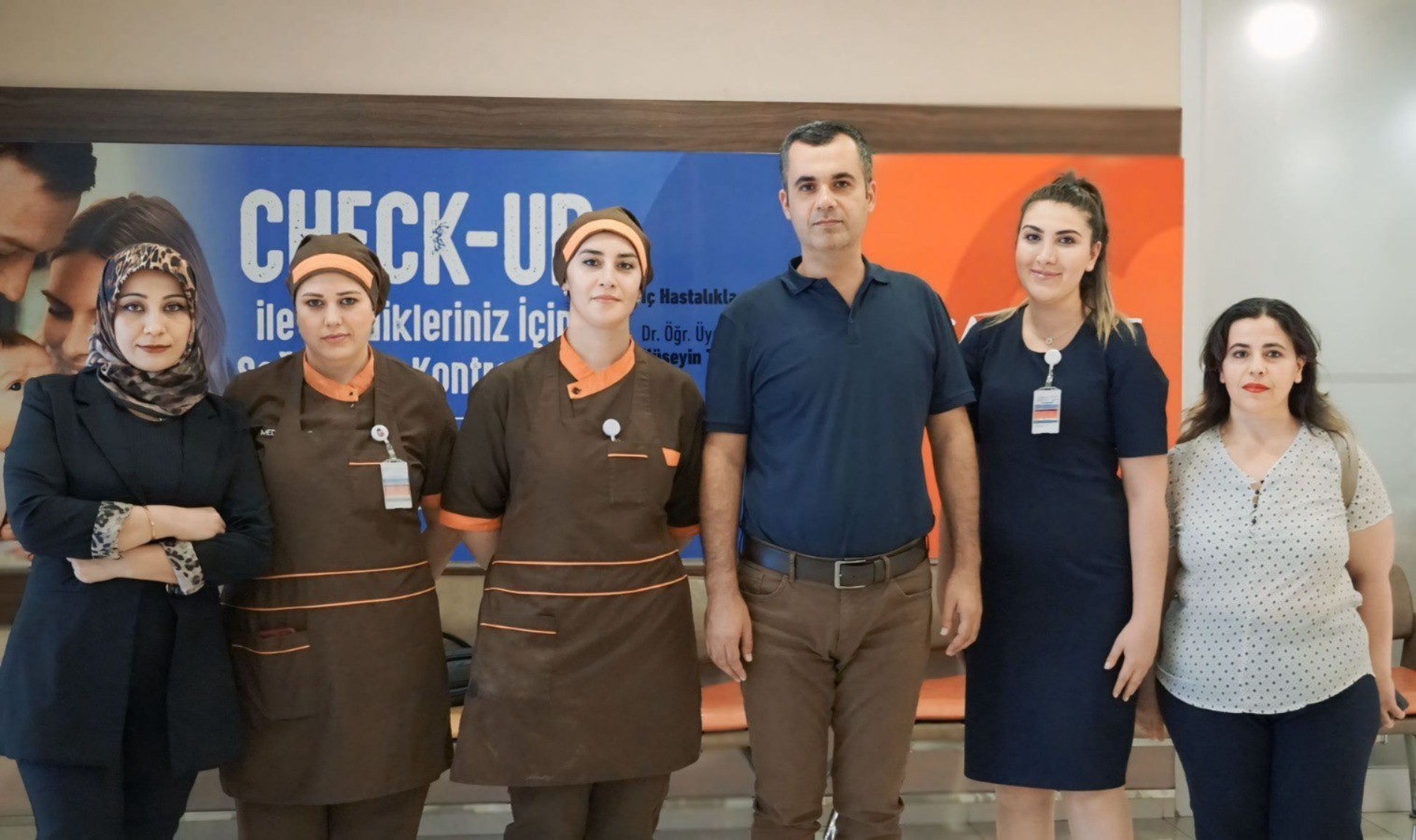
Medical Point Hospital General Surgery Specialist Assoc. Dr. Mesut Gül gave information about the importance of early diagnosis and treatment methods.
“Breast Cancer Awareness Month”, which is held every year in October, aims to promote early screening and prevention of the disease that affects approximately 2 million women worldwide. In October, the “Pink Ribbon” theme is used in awareness and awareness-raising events around the world. Breast cancer is a type of cancer that is more common in women over the age of 50, although it can also occur in men. However, in recent years, it has been observed that it can also affect younger women.
Drawing attention to the importance of early diagnosis and treatment, Medical Point Hospital General Surgery Specialist Assoc. Dr. Mesut Gül said, “Breast cancer is a disease in which cells in the breast grow uncontrollably and form tumors. It usually starts from milk ducts and milk glands. There are two main types of breast cancer. Invasive (Invasive) Carcinoma. In this type, cancerous cells have the potential to spread beyond the breast tissue and into surrounding tissues. Most breast cancers are invasive carcinomas and spread. Among cancers that spread, ductal carcinoma, which originates from the cells that form the breast ducts, is the most common type. There are five different subtypes under this category. Noninvasive (non-invasive) carcinoma. In this type, cancer cells remain in the milk ducts or lobules in the breast and do not spread. There are two different subtypes under the noninvasive carcinoma category.”
“Lack of physical activity may increase the risk of breast cancer”
Giving information about breast cancer risk factors, Assoc. Prof. Dr. Mesut Gül said, “Sedentary life. Lack of physical activity can increase the risk of breast cancer. Being overweight or obese. Excess weight can predispose to the development of breast cancer. Smoking. Smoking is an important factor that increases the risk of cancer. Never having given birth. Not having children can increase the risk of breast cancer. Becoming a mother at a late age (35 years and older). Giving birth after 35 years of age is known to increase the risk of breast cancer. Never breastfeeding. Breastfeeding has a lowering effect on breast cancer risk. Using hormone therapy after menopause (HRT). Long-term use of hormone therapy after menopause may pose a risk. Drinking alcohol. Alcohol consumption is also one of the factors that increase the risk of breast cancer.”
“Breast cancer is approximately 100 times more common in women than in men”
Referring to the risk factors that cannot be changed, Assoc. Prof. Dr. Gül said, “Breast cancer is approximately 100 times more common in women than in men. As age increases, the risk of breast cancer increases. Having BRCA1 and BRCA2 genes is an important factor that increases the risk of breast cancer. Family history of breast cancer. Having breast cancer in first-degree relatives (mother, sister, daughter) doubles the risk. However, it is important to remember that about 85 percent of breast cancers occur in women without a family history of breast cancer. Cancer in one breast. A diagnosis of cancer in one breast increases the risk of cancer in the other breast or in other parts of the same breast. Benign breast masses. Some benign growths, such as fibroadenomas, can increase the risk of breast cancer later in life. Early menstruation. Starting menstruation before age 12 can increase the risk of breast cancer. Late menopause. Entering menopause at age 55 or later is one of the risk factors. History of radiotherapy. Radiotherapy to the rib cage area may increase the risk of breast cancer in the long term.”
Medical Point Hospital General Surgery Specialist Assoc. Dr. Mesut Gül gave information about the importance of early diagnosis and treatment methods and said, “Breast cancer usually does not give symptoms in its early stages. Therefore, regular checks and screening programs are extremely important. Women learning and regularly performing breast self-examination (CBE) is a critical step for early diagnosis. Early diagnosis of breast cancer improves treatment success and prolongs survival. For this reason, all women between the ages of 40-69 are recommended to have a mammogram every 2 years. For those with high risk factors, this screening can be done once a year.”
İHA Haber Kodu: 20241021AW312677