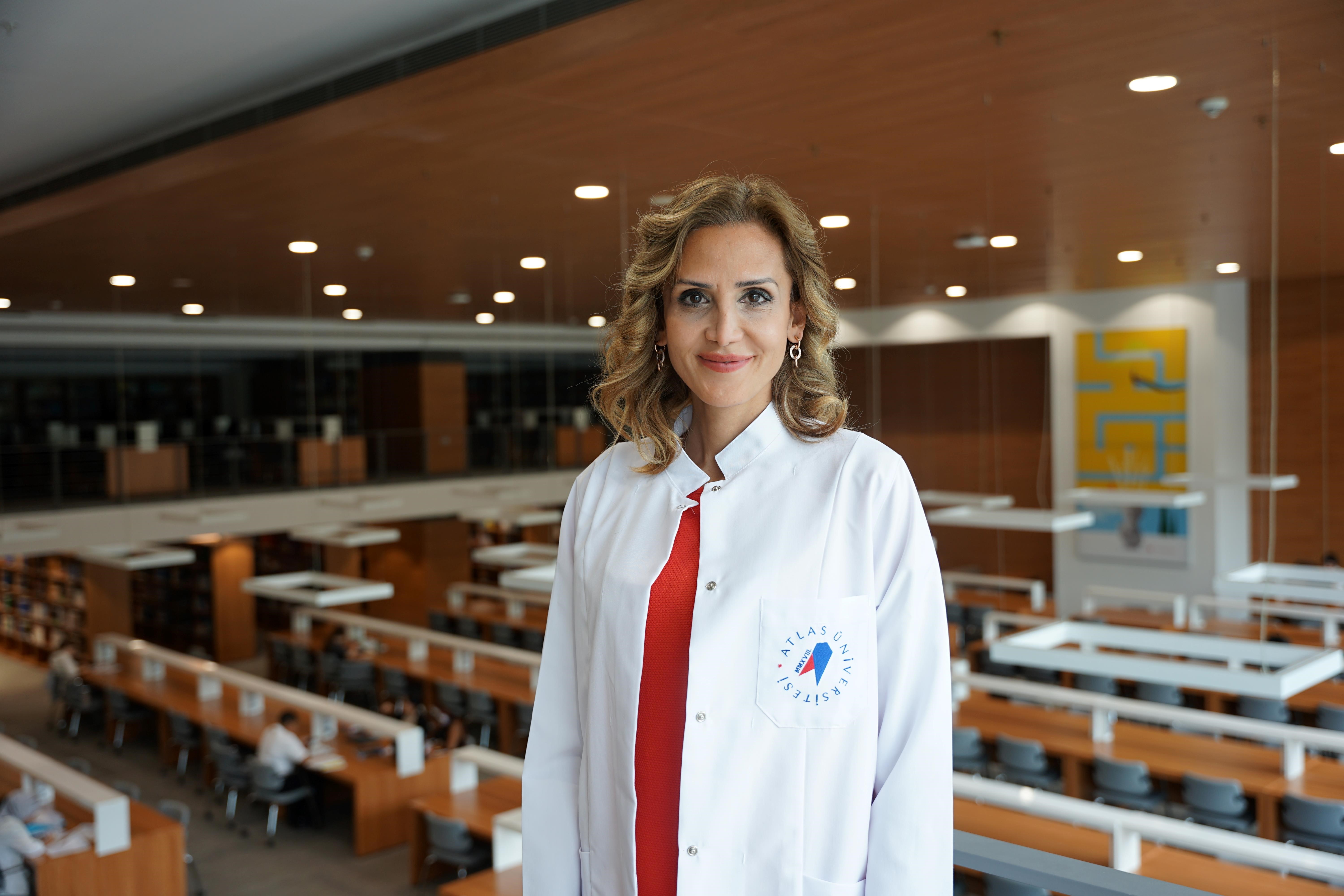
Noting that orthodontic treatments usually start between the ages of 8 and 13, Orthodontics Specialist Sanaz Sadry said that the most appropriate period is 'pre-adolescence' because skeletal disorders can be eliminated before the child's growth period ends and young tissues are better directed. Sadry also drew attention to the points to be considered during the orthodontic treatment process.
Istanbul Atlas University Faculty of Dentistry, Head of the Department of Orthodontics Assoc. Prof. Dr. Sanaz Sadry made an assessment regarding orthodontics and what should be considered during orthodontic treatment.
Stating that orthodontics is a specialty of dentistry that deals with the proper placement of incorrectly positioned teeth on the jaw bones and the diagnosis and treatment of facial irregularities, Assoc. Prof. Dr. Sanaz Sadry said, “The aim is to have properly aligned teeth that are compatible with the teeth in the opposite jaw. Of course, although it means straight teeth, the orthodontics department, which exceeds the meaning of the word, treats not only teeth but also lower and mid-face irregularities today.”
Adults constitute 30 percent of patients undergoing orthodontic treatment
Noting that orthodontic treatment is applied to children and adults, Sadry said, “Although the view that orthodontic treatment can only be applied in children was dominant before, today, 30 percent of patients receiving orthodontic treatment are adults. Therefore, it is possible to say that orthodontic treatment is possible for individuals of all ages. At the same time, a healthy bite is as important for patients at the age of 60 as it is at the age of 16. Healthy teeth can be moved as desired at any age.”
At what age should orthodontic treatment be started?
Stating that there is no age limit in orthodontic treatment, everyone from 7 to 70 can be treated, Sadry said that there are optimal age recommendations for orthodontic treatment.
Stating that it is recommended by the American Association of Orthodontics (AAO) that children should undergo orthodontic control before the age of 7, Sadry said, “Because at this age, that is, while there are still milk teeth in the mouth, problems in the jaw and tooth development of the child can be easily detected by the orthodontist. If an abnormal situation is detected, intervention to the orthodontic problem can be done early and the treatment process can be carried out much easier and in a much shorter time. Otherwise, more complicated and more costly treatments may be needed at advanced ages.”
Noting that active treatment of orthodontic patients usually begins between the ages of 8 and 13, Sadry said, “Thus, skeletal disorders can be corrected before the child's growth period ends. Since young tissues are better directed, the favorite treatment time of orthodontists can be called 'pre-adolescence'. It will be easier to organize the crowded structures on the teeth, which start at a young age, during adolescence. The most suitable age for orthodontic treatment may vary depending on the individual's tooth structure, jaw development and general health status. For this reason, the most accurate age should be determined by consulting a specialist orthodontist.”
Duration of orthodontic treatment varies from person to person
Stating that the duration of orthodontic treatment may also differ from person to person, Sadry said, “While active orthodontic treatment can last between 1 and 4 years, it ends in an average of 2 years. Some individuals may respond to treatment faster or later than others due to their biological structure. In addition, preventive and early treatments may only last a few months. Appliances are periodically adapted during the treatment process.”
Attention to 4 points in orthodontic treatment
Assoc. Prof. Dr. Sanaz Sadry also made the following warnings regarding the things to be considered in orthodontic treatment:
Oral Hygiene: You should brush your teeth more than your normal routine. Teeth should be brushed after every meal and in the evening before going to bed. The brushing process should last an average of 3 minutes and should be continued until the braces are sparkling. In addition to the 'orthodontic toothbrush', you should also use an 'interface brush' throughout the treatment. If the teeth are not brushed well during this process, irreversible stains will occur on your teeth as a result of decay under the brackets. In addition, poor oral hygiene causes the physician to be unhappy and prolongs the treatment.
Orthodontic Appliances and Devices: You should wear the appliances, plates and tires that your doctor wants you to wear properly. Otherwise, the duration of your treatment will be prolonged and the desired result will not be achieved. You should avoid forbidden foods to prevent the brackets from breaking off from the tooth surface. Rupture of the brackets slows down the treatment and causes additional charges.
Appointments Pay attention to your appointments. If you have a very special situation that causes you to forget your appointments, you can ask for a reminder. We recommend that you do not leave it to the last day to make an appointment by phone, except in emergencies. It is a good idea to plan your vacations and long trips according to the course of your treatment. During some periods of treatment, you should not make plans without asking your doctor and you should not disappear for long periods of time. Otherwise, treatment will be difficult.
Patience: You need to be patient during the adjustment period, which usually lasts 10 days. Although we do not recommend taking painkillers, painkillers other than aspirin can be used in case of difficulty. Orthodontic treatment is a prescriptive, long and difficult treatment that requires discipline, meticulousness and cooperation. Because if the force applied to the teeth remains uncontrolled, it can have a melting effect on the bones and tooth roots.
İHA Haber Kodu: 20241031AW319695