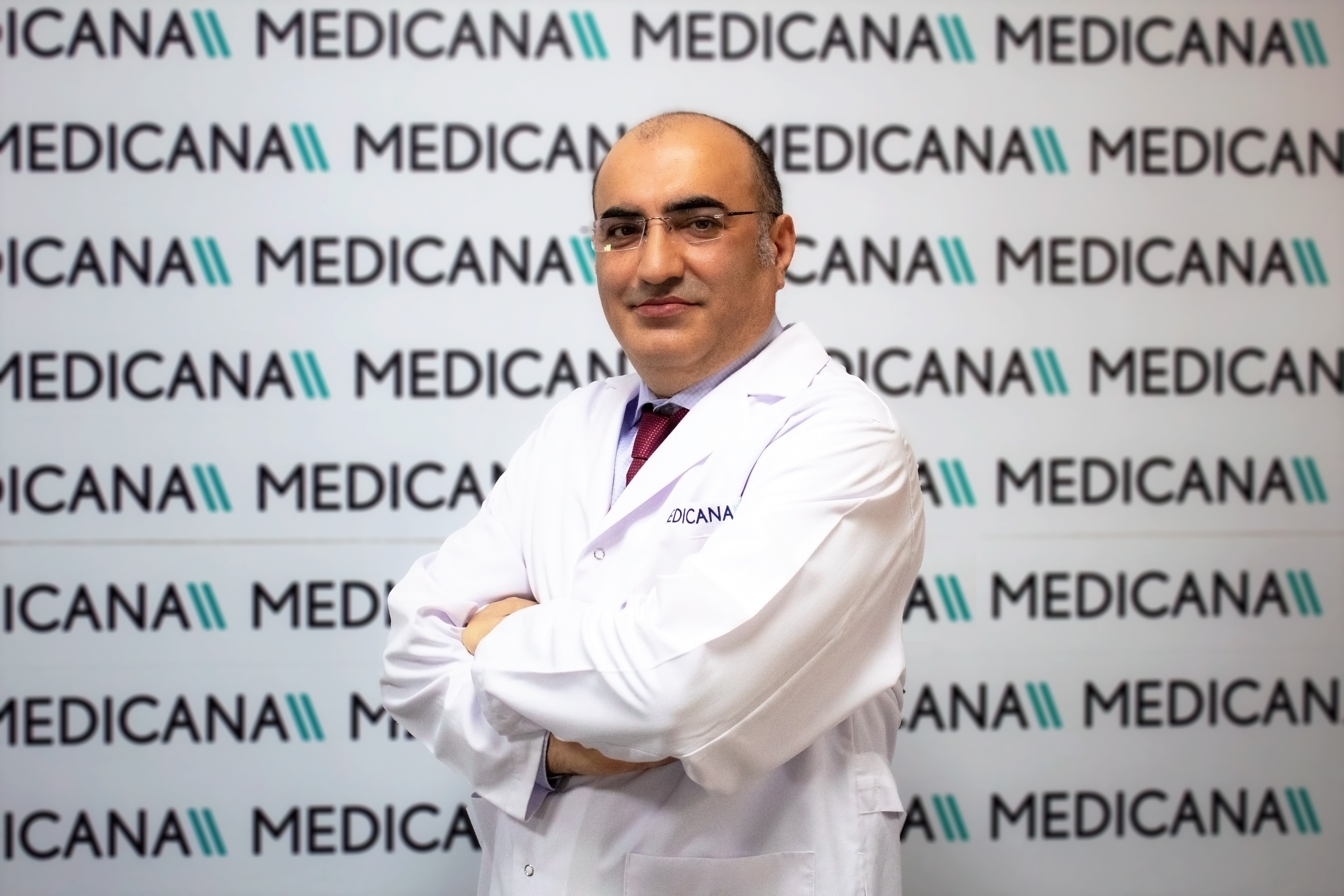
Liver cancer, one of the most common types of cancer in the world, occurs 95% of the time when cancers of other organs and tissues spread to the liver. Stating that a very small portion of malignant masses in the liver originate directly from the liver, General Surgery Specialist Assoc. Prof. Dr. Mahir Kırnap said, “Cancers originating from the liver are usually seen with cirrhosis. It usually affects people after the age of 60 and in advanced ages. But some hereditary diseases such as tyrosinemia can be seen even in childhood. Chronic hepatitis B and C infections, diabetes and consuming high amounts of alcohol for many years are among the risk factors for liver cancer.”
Today, many cases of liver cancer are diagnosed with imaging methods performed for various reasons without the patient having a complaint related to the mass in the liver. “Almost 95% of malignant masses seen in the liver are due to the spread of other organ and tissue cancers to the liver,” said Medicana Ataşehir Hospital General Surgery Specialist Assoc. Dr. Mahir Kırnap, ”Only 5% of malignant masses in the liver are tumors originating directly from the liver. In other words, most of the malignant masses in the liver are due to extrahepatic causes. The most common malignant tumor that originates directly from the liver is hepatocellular cancer, which originates from liver cells (hepatocytes).”
Assoc. Prof. Dr. Mahir Kırnap said, “Any cancer that can pass into the circulation and take hold where it goes can also metastasize to the liver. Metastatic liver tumors (secondary) are most commonly due to colorectal, breast and ovarian cancers. But cancers of any organ such as pancreas, stomach, lung, thyroid or any tissue such as muscle, bone, vein and connective tissue can also metastasize to the liver.”
Jaundice may occur in the skin and eyes
Emphasizing that the size and location of the mass is the main determinant in the complaints of liver cancer patients, Assoc. Prof. Dr. Mahir Kırnap continued as follows: “The liver is surrounded by the stomach, duodenum, large intestine, right kidney and adrenal gland, the largest vein in the abdomen and the diaphragm. The bile produced by the liver leaves the liver through the bile ducts and enters the duodenum. Masses in the liver can cause complaints by pressing or touching these tissues and organs.”
Stating that malignant masses consume a lot of energy regardless of their location and size, which can cause weight loss and weakness in the patient, Assoc. Prof. Dr. Kırnap listed the symptoms of liver cancer as follows: “Involuntary weight loss, loss of appetite, pain in the right upper quadrant of the abdomen, a palpable mass, nausea-vomiting, general weakness, weakness, jaundice in the white part of the eye and skin, cream-white (acholic) stools are common symptoms.”
Stating that hepatocellular carcinoma (HCC) is the most common primary cancer of the liver, Assoc. Prof. Dr. Kırnap said, “Although there are changes on a country-by-country basis, HCC is associated with chronic liver disease (cirrhosis) in 80-90% of cases. It is usually seen after the age of 60, most commonly at the age of 85. However, in some hereditary diseases such as tyrosinemia, it can be seen even in childhood.”
Hygienic places should be preferred for shaving and tattooing
Emphasizing that chronic hepatitis B and hepatitis C infection, cirrhosis, some hereditary diseases such as hemachromatosis and Wilson's disease, diabetes, non-alcoholic fatty liver disease, aflatoxins and years of high alcohol consumption are the biggest risk factors in the development of hepatocellular cancer, Assoc. Prof. Mahir Kırnap explained the measures that can be taken to prevent liver cancer as follows:
“Reducing the known risk factors for the development of hepatocellular cancer also reduces the risk of developing cancer. It is important to stop or reduce alcohol use. Women should not have more than one drink a day and men should not have more than two drinks a day. Any effort to prevent getting hepatitis will help. This means getting vaccinated against hepatitis B, knowing the health status of your sexual partners in terms of infectious diseases, shaving and tattooing in hygienic places. Today, there are treatments for hepatitis C and partly for hepatitis B. Taking these treatments will also have a protective effect.”
If detected at an early stage, it can be completely cured
“HCC is a cancer, and like many cancers caught in the early stages, it has the chance to be completely cured,” said Assoc. Prof. Dr. Mahir Kırnap and added: ”In the early stages, complete recovery can be achieved with surgery (resection or transplantation) and locoregional treatments, and in the late stages with locoregional treatments and chemotherapy. In patients where this is not possible, life is prolonged and complaints are alleviated.”
İHA Haber Kodu: 20240823AW272885