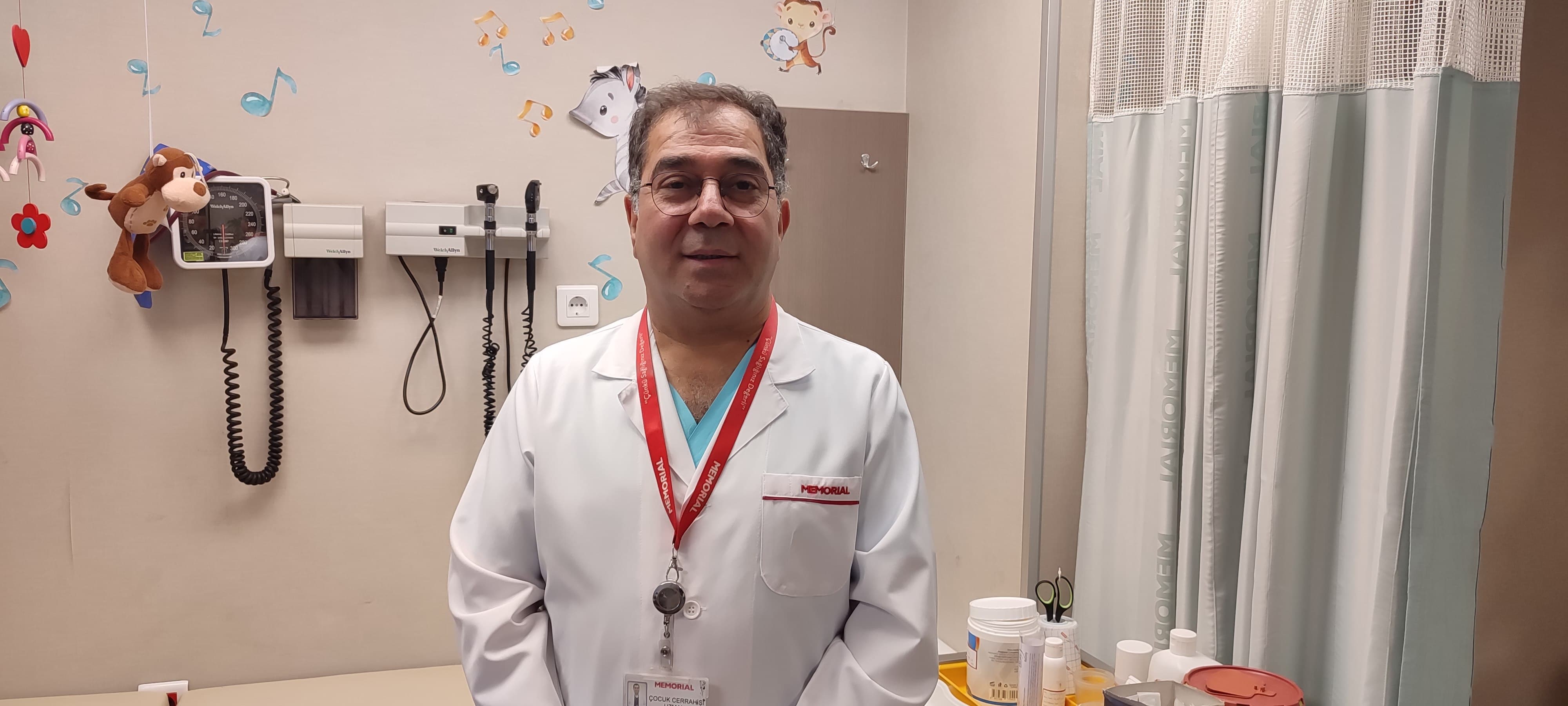
Prof. Dr. Murat Kemal Çiğdem from the Department of Pediatric Surgery at Memorial Diyarbakır Hospital said, “Some types of Hirschsprung's disease, also known as intestinal paralysis among the people, can be corrected with an operation performed only through the anus without any incision in the abdomen, while some may require staged surgeries.”
Hirschsprung's Disease, a congenital disease, is known as the inability to defecate that occurs from the moment babies are born. Intestinal paralysis, which occurs when some nerve cells in the lower parts of the large intestine fail to develop, is observed as an unknown health problem by most parents. Memorial Diyarbakır Hospital Pediatric Surgery Specialist Prof. Dr. Murat Kemal Çiğdem drew attention to the importance of this disease. Stating that it is often confused with constipation today, Prof. Çiğdem said, “Constipation can occur later, but intestinal paralysis is considered a health problem that exists from the first day. Although the general symptoms are the same, many families may be unaware that this condition is treatable. For us doctors, the most important point is the early diagnosis of the disease. In cases diagnosed early, we can be a beacon of hope for children with surgical intervention.”
Prof. Çiğdem stated that the normal defecation process is that babies can pass stools in the first 24 hours to 48 hours after birth and said, “We proceed with imaging of the intestines and biopsy process in the diagnosis stage of Hirschsprung's Disease, which may not show symptoms in the first days. Early diagnosis is very important, we perform surgical intervention with early diagnosis and treatment and the chance of success can be quite high. With surgery, the part of the intestine that does not work can be removed, from the working part to the anus, the intestines can be brought and sutured.”
Stating that the chance of success in Hirschsprung's disease, which has a very low chance of recurrence, can be quite high, Prof. Çiğdem said, “But in some cases we can see this low rate. In this case, there may be recurrent constipation attacks. Our recommendation to the families of the babies we operate will be to follow up and control them regularly with the same sensitivity after surgery. In some cases, constipation attacks may also occur. Parents who notice this should contact us. Babies who regain their health are always a source of happiness for us.”
İHA Haber Kodu: 20240920AW291632