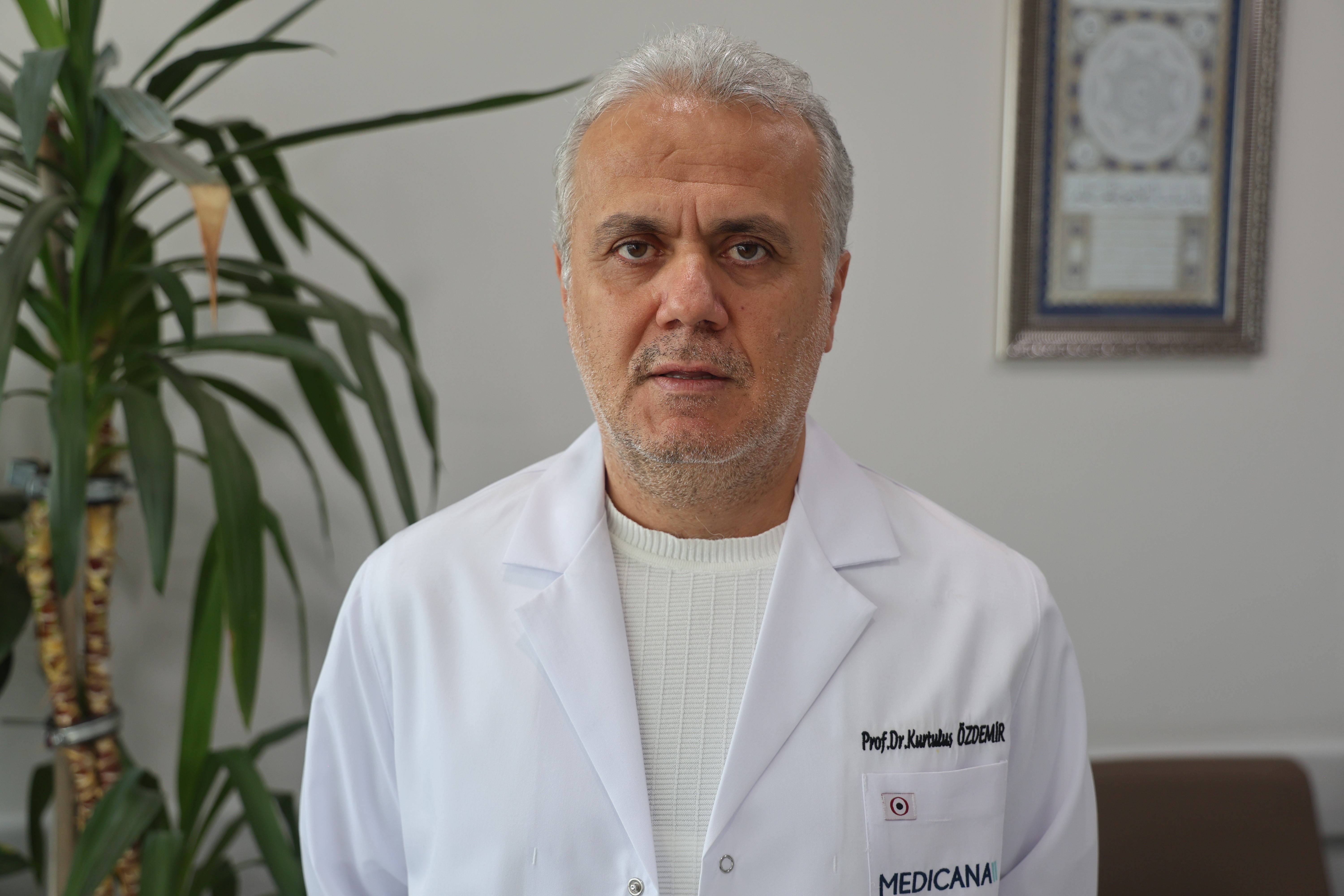
Excessive temperature increase emerges as the most important problem affecting cardiovascular patients in the summer months. Cardiology Specialist Prof. Dr. Kurtuluş Özdemir stated that it is important for cardiovascular patients and everyone to be protected from the heat and said, “Our recommendations are not to go out when the sun is steep, to prevent the heat that the body will absorb by wearing light-colored clothes, as well as consuming plenty of water and light foods.”
Especially on days with high temperatures, a lot of fluid loss occurs with increased sweating in the body. As the body loses more water than it takes in, the blood becomes more dense and the load on the heart increases. Stating that excessive temperature increase is the most important problem affecting cardiovascular patients, Medicana Konya Hospital Cardiology Specialist Prof. Dr. Kurtuluş Özdemir said, “We know that the most important problem affecting cardiovascular patients in summer is excessive temperature increase. Apart from its normal functions, the heart is also an important regulation tool for the body. It comes into play as a serious regulation mechanism to maintain the normal functions of the body against these temperature increases. We need to evaluate the temperature increase in two ways. One, normal temperature increase, which is what we encounter in Central Anatolia, and the temperature increase with excessive humidity. These two can manifest differently from each other. In order to compensate for the increase in heat, the most important regulation mechanism of the body is to sweat and to expel the excess heat in the body in this way.”
“When the body loses fluid, especially blood concentration increases”
Cardiology Specialist Prof. Dr. Kurtuluş Özdemir said that when the body loses fluid, especially the tendency of blood clotting increases and added: “While the body tries to remove this heat by sweating, of course, a serious loss of fluid, plus salt loss occurs in the meantime. This has negative effects for the body. What happens when the body loses fluid is that blood concentration increases. Increased blood concentration increases the tendency for blood clotting, which in turn increases the risk of adverse cardiac events in normal people, especially in cardiovascular patients. It would take too much time to mention each disease individually, but generally speaking, the kidneys are also involved in this regulation, to ensure fluid excretion from the body, to compensate for the lack of body water caused by fluid excretion. The kidneys secrete hormones that cause vasoconstriction in the body, which also increases the load on the heart. It's a very complex series of events, and as a result the heart is subjected to stress. The most important thing to do is to consume plenty of water to prevent the body from losing heat and salt through sweating. Depending on the person's body structure, weight and fluid loss, taking at least 2 and a half to 3 liters of water a day is the most important compensation tool. Of course, in addition to this, especially for heart patients, as we recommend to everyone, protection from the heat, not going out at times when the sun is steep, wearing light-colored clothes to prevent the heat that the body will absorb, as well as consuming plenty of water and light foods. Our general recommendations are to adjust the diet with lighter foods without too much.”
“People in humid regions should pay more attention”
Stating that people living in humid regions should pay more attention, Prof. Dr. Özdemir said, “Especially in the sea regions, especially in the regions close to the Equator, the increase in temperature with the increase in humidity is a more dangerous event. Because the body cannot sweat in humid areas. When there is no sweating, it cannot remove the heat and causes heat stroke and the effects of heat on the cardiovascular system to be more pronounced. Therefore, people living in humid regions should pay more attention. Since the body cannot sweat, the body temperature increases. This time, with the effect of the increase in temperature, the vessels in the body dilate on the contrary, blood pressure drops, the heart is stressed in a different way, and as a result, we are faced with a result such as preparing the ground for serious ischemic events, especially in vascular patients.”
İHA Haber Kodu: 20240829AW276487