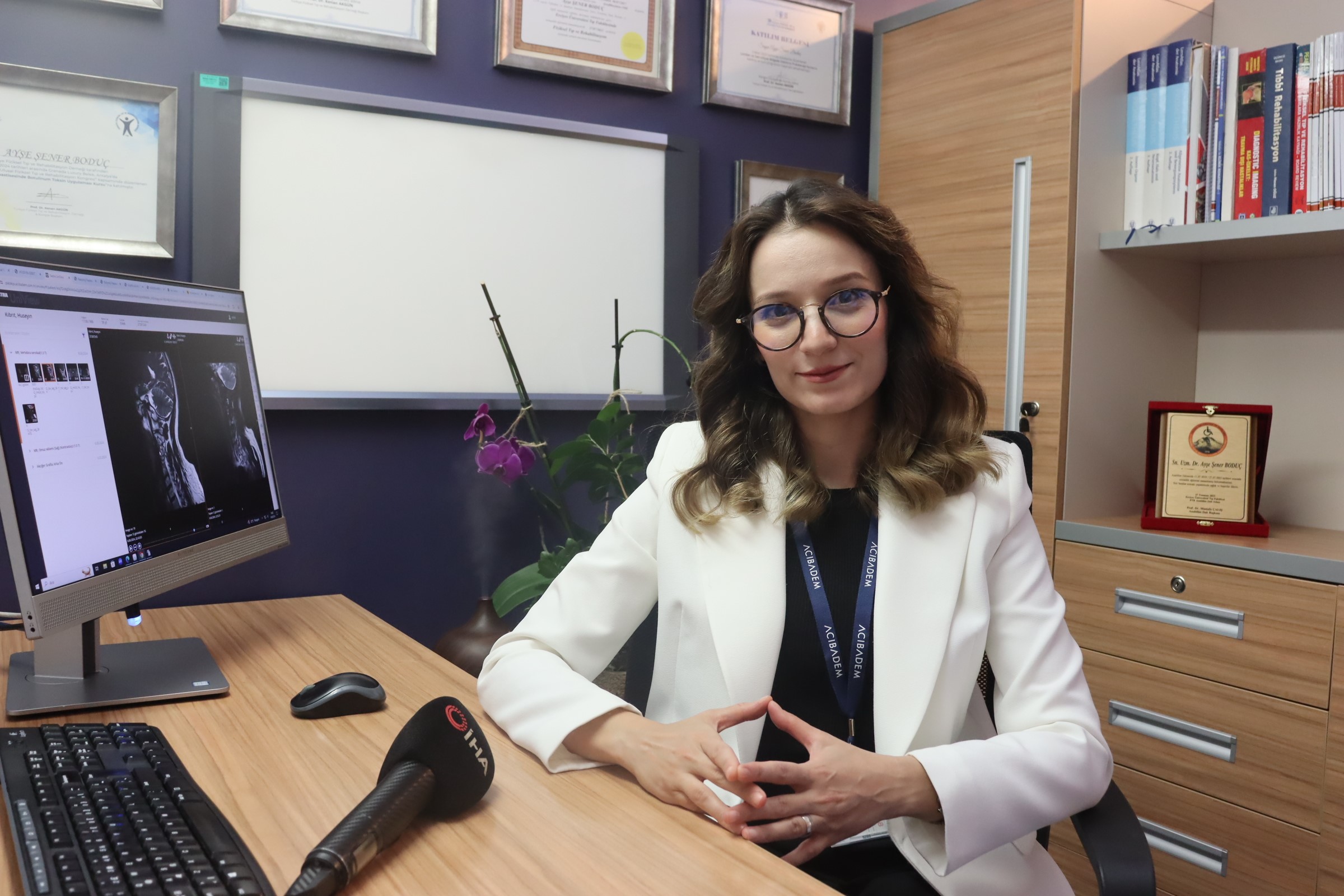
Physical Therapy and Rehabilitation Specialist Dr. Ayşe Şener Boduç said that complaints such as urinary and fecal incontinence, sexual dysfunctions, chronic pelvic pain, postpartum muscle strengthening or during menopause, after prostate surgery in men, and urination disorders in children can be resolved with pelvic floor rehabilitation.
Physical Therapy and Rehabilitation Specialist Dr. Ayşe Şener Boduç from Acıbadem Kayseri Hospital gave information about pelvic floor rehabilitation. Stating that the pelvic region, also known as the pelvis, is the lowest part of the abdomen, Dr. Boduç stated that the pelvis includes the hip bones, bladder and rectum. He stated that this pelvic-shaped region between the abdomen and thighs carries the weight of the upper part of the body and transmits it to the legs, resulting in actions such as standing, walking and sitting. Referring to the functions of the pelvic floor muscles, Dr. Boduç said, “These muscles support the bladder, intestines and reproductive organs; help to hold urine and feces; contribute to the regulation of sexual functions. In addition, if these muscles are strong, the expectant mother can give birth more easily.”
“It can lead to urinary incontinence and sexual problems”
Pointing out that the pelvic muscles need to be strengthened in order to maintain their functions successfully, Dr. Boduç said, “Pelvic floor muscles are the muscles that support organs such as the bladder, uterus and intestines in the pelvic region. Weakening of these muscles can lead to various health problems such as urinary incontinence, pelvic organ prolapse, pelvic pain and sexual dysfunctions.”
Recommending pelvic floor rehabilitation to increase the strength and endurance of the pelvic floor muscles, Dr. Boduç stated that it may be possible to control urine and feces, prevent pelvic organ prolapse, improve sexual functions and reduce pelvic pain. Speaking about in which cases this rehabilitation is needed, Dr. Boduç said, “Pelvic floor rehabilitation should be performed in cases such as urinary and fecal incontinence, pelvic organ prolapse, sexual dysfunctions, chronic pelvic pain and postpartum period to strengthen the muscles after pregnancy, during menopause, after prostate surgery in men, urination disorders in children, ie bedwetting.”
“The treatment plan should be personalized”
Stating that pelvic floor rehabilitation includes a number of support and methods such as various exercises in physical therapy, biofeedback, electrical stimulation, magnetic field therapy, lifestyle changes and patient education, Dr. Boduç pointed out that treatment plans should be determined individually since each patient's condition is different. Pointing out that the methods applied are shaped according to the specific needs of the patient, she added that pelvic floor rehabilitation significantly improves the quality of life of individuals who have problems with pelvic floor muscles.
İHA Haber Kodu: 20240820AW271198