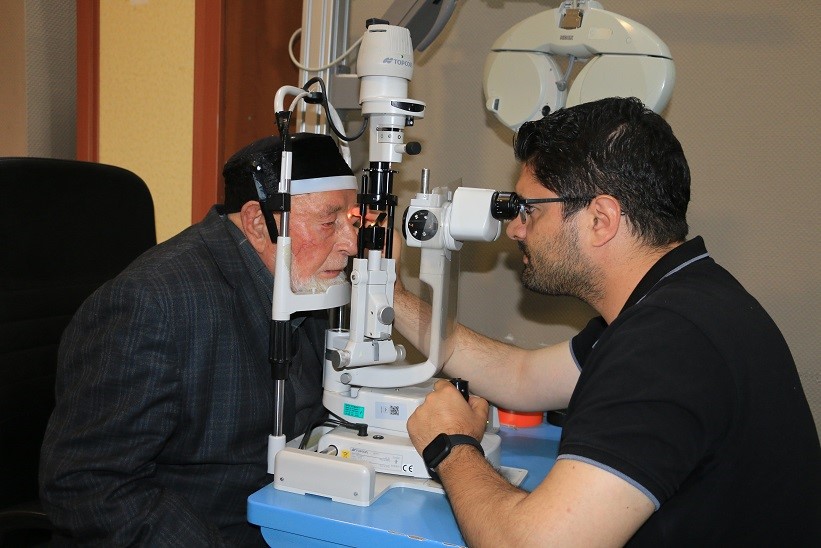
Erzincan Binali Yıldırım University Faculty of Medicine Department of Ophthalmology Lecturer Kemal Bayrakçeken said that diabetes, which is an insidious disease in terms of the eye, causes many disorders, especially visual impairments and cataracts at an early age.
Stating that diabetes-related eye diseases are the general name of eye diseases that occur due to diabetes in the eye, including diabetic retinopathy, Bayrakçeken said, “According to the data of the Ministry of Health, it is seen that diabetic retinopathy developed in more than 93 million people in 3/1 of 415 million diabetics in the world in 2015, which is a very large number. Eye findings in diabetes can go from mild to severe. In other words, there is a wide range from temporary visual disturbances to double vision and permanent vision loss. The patient may have temporary visual disturbances due to fluctuations in blood sugar. These changes in the refraction of the eye are reflected as changes in the eye number of the person in our outpatients. While our patient has a number 2 myopia, he/she may become hypermetropic when he/she comes back the next day. There may be other eye disorders.”
“Diabetic eye diseases can cause serious problems leading to vision loss and blindness”
Stating that they ask the patients who come to the outpatient clinic in the eye examination whether they have diabetes and that the patient usually says that he has a sugar that cannot be regular, Dr. Faculty Member Kemal Bayrakçeken said, “In these cases, instead of giving glasses, we physicians emphasize that it would be healthier to control sugar and then come to the examination. All diabetic eye diseases have the potential to cause serious problems leading to vision loss and blindness. There may also be temporary blurred vision. It can also lead to the disease we call diabetic retinopathy, which gives serious findings behind the eye. If we say what diabetic retinopathy is, we can consider it as a spectrum that causes bleeding in the capillaries in the retina, loss of vision and blindness as a result of fluid leakage into the retina. As for the symptoms, these may occur in our patients in the form of decreased vision, blurred vision, blind spots, dark spots, especially the appearance of straight and wavy lines in the center of vision and loss of vividness of colors.”
Talking about how diabetic retinopathy occurs, Bayrakçeken said, “Everything we see around us is translated into electrical signals in the retina in the eye and transmitted to the visual center in the brain. The retina is the nerve layer behind the eye that allows the image to be transferred to the brain. Diabetic retinopathy disrupts the capillaries that feed the retina, causing bleeding and fluid leakage in the retina in the beginning, and in the later stages, it can cause decreased vision and blindness as a result of blockage of blood vessels in the retina. There is also diabetic macular edema. The macular region, which we call the yellow spot, is the most central layer of the retina that provides vision. Diabetic macular edema may occur due to fluid accumulation here. This leads to serious vision loss in diabetic patients.
Who is at risk for diabetic retinopathy; Those who have diabetes for a long time, those with high and irregular blood sugar levels, those with hypertension and high cholesterol in addition to diabetes are at great risk, and these patients should be carefully monitored. In addition to diabetes, if there is kidney failure, the patient needs to undergo dialysis. Diabetes-related problems may progress or even worsen during pregnancy. How is this detected? Patients who apply to outpatient clinics should undergo a full-fledged eye examination. After determining the visual acuity of the patients, the pupils should be dilated and the back of the eye should be examined in detail. With the introduction of modern devices, we can easily make our diagnoses.”
İHA Haber Kodu: 20240915AW287989