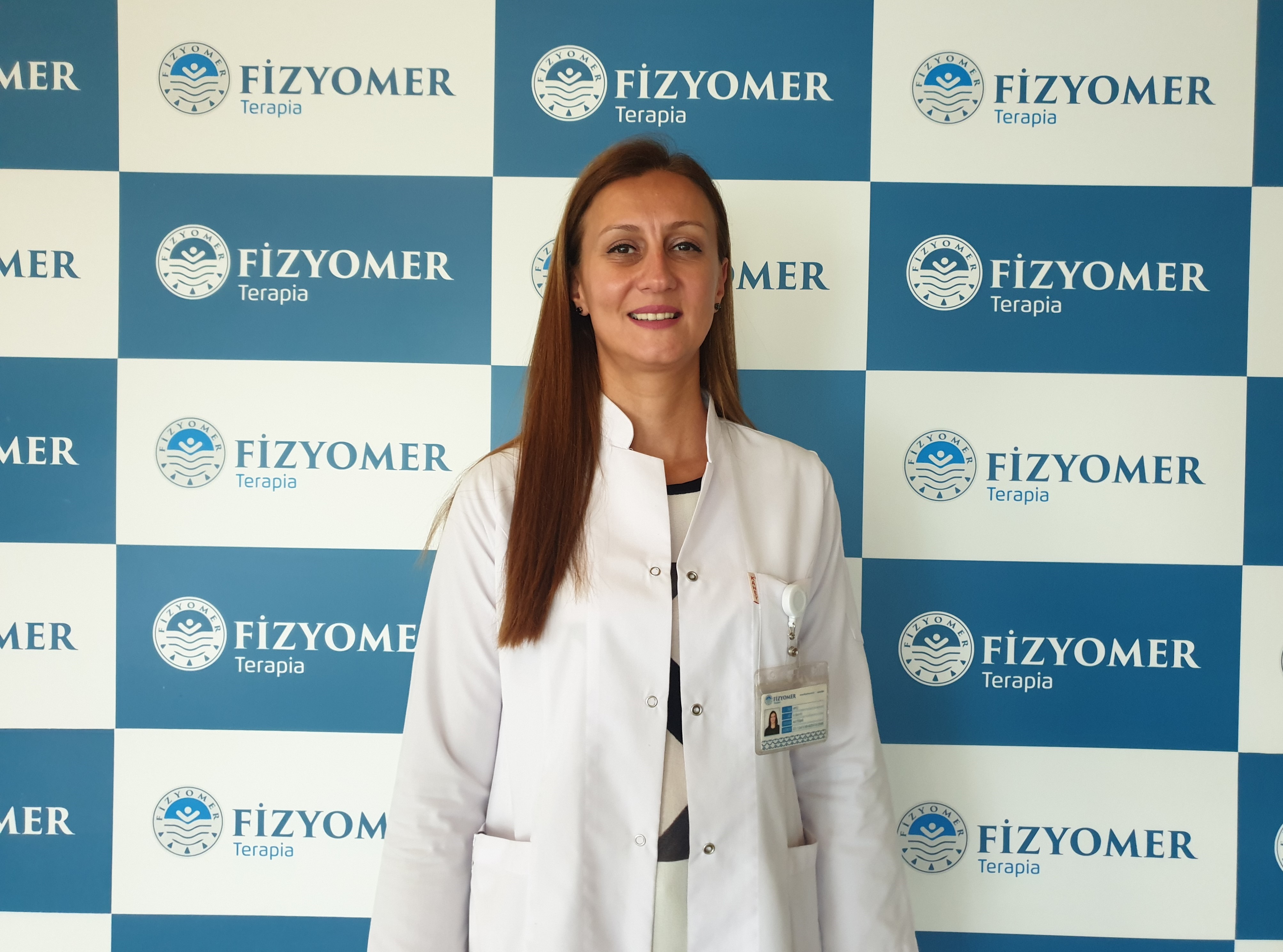
Berrin Akpınar, Physical Therapy and Rehabilitation Specialist at Eskişehir Fizyomer Terapia Physical Therapy and Rehabilitation Center, said about the laser treatment of heel spurs, “High intensity laser therapy helps us get very satisfactory results in the treatment of heel spurs and plantar fasciitis.”
Berrin Akpınar, Physical Therapy and Rehabilitation Specialist at Eskişehir Fizyomer Terapia Physical Therapy and Rehabilitation Center, gave information about the symptoms, causes and treatment of heel spurs. Stating that the heel spur is a bone-like calcium deposit formed between the heel bone and the base pit, Akpınar said, “It is one of the most common causes of heel pain. But sometimes pain can be felt in the same area without a heel spur. Inflammation and micro tears in the membrane called 'plantar fascia' on the sole of our foot, which supports the long arch of our foot, also cause pain in the area. This problem is also called plantar fasciitis. Even if there is a spur on the heel, the pain is caused by plantar fasciitis.”
“Advancing age can cause inflammation by reducing the flexibility of the plantar fascia”
Speaking about the symptoms of heel spurs, Akpınar said, “Usually, a stabbing pain is felt in the first step taken in the morning. When you stand up and move more, the pain decreases, but it starts again when you stand and walk or sit for a long time. As for the causes of heel spurs, excessive weight gain and obesity, wearing inappropriate shoes, spending most of the day standing, walking or jogging on very hard surfaces, excessive physical activity, excessive tension of the calf muscle, flat feet or high foot arch, foot problems such as side or inward stepping, advancing age can cause inflammation by reducing the flexibility of the plantar fascia. It is sufficient to take an X-ray of the foot to diagnose patients who are thought to have heel spurs.”
“The possibility of recurrence is also decreasing”
Providing information about the treatment of heel spurs, Physical Therapy and Rehabilitation Specialist Berrin Akpınar continued as follows;
“First of all, it is necessary to regulate the underlying factors. It is necessary to lose weight, choose the right shoes, not to stand for too long, and treat deformities in the foot with orthoses, if any. Cold application and anti-inflammatory drugs may be useful. Relaxing the calf muscle and plantar fascia with exercises helps to eliminate pain and the underlying problem. Interventional treatments such as cortisone injections, PRP injections, prolotherapy, ozone injections can also be useful.
Among physical therapy methods, ESWT (high-energy sound waves) is the most commonly known and applied treatment method in the treatment of heel spurs and plantar fasciitis. However, this treatment method is also inadequate in many cases or the problem recurs. High-intensity laser therapy, which we have been using successfully in recent years, has helped us achieve very satisfactory results in the treatment of heel spurs and plantar fasciitis. It has become much easier to relieve heel pain by applying this device, also known as robotic laser, to the calf muscle and heel in a way to scan the plantar fascia. In this way, heel spurs and plantar fasciitis can be treated at a rate of 90-95 percent. In addition, the possibility of recurrence is also reduced. Surgical treatment may also be considered in cases that are not relieved by all these methods.”
İHA Haber Kodu: 20231204AW090961