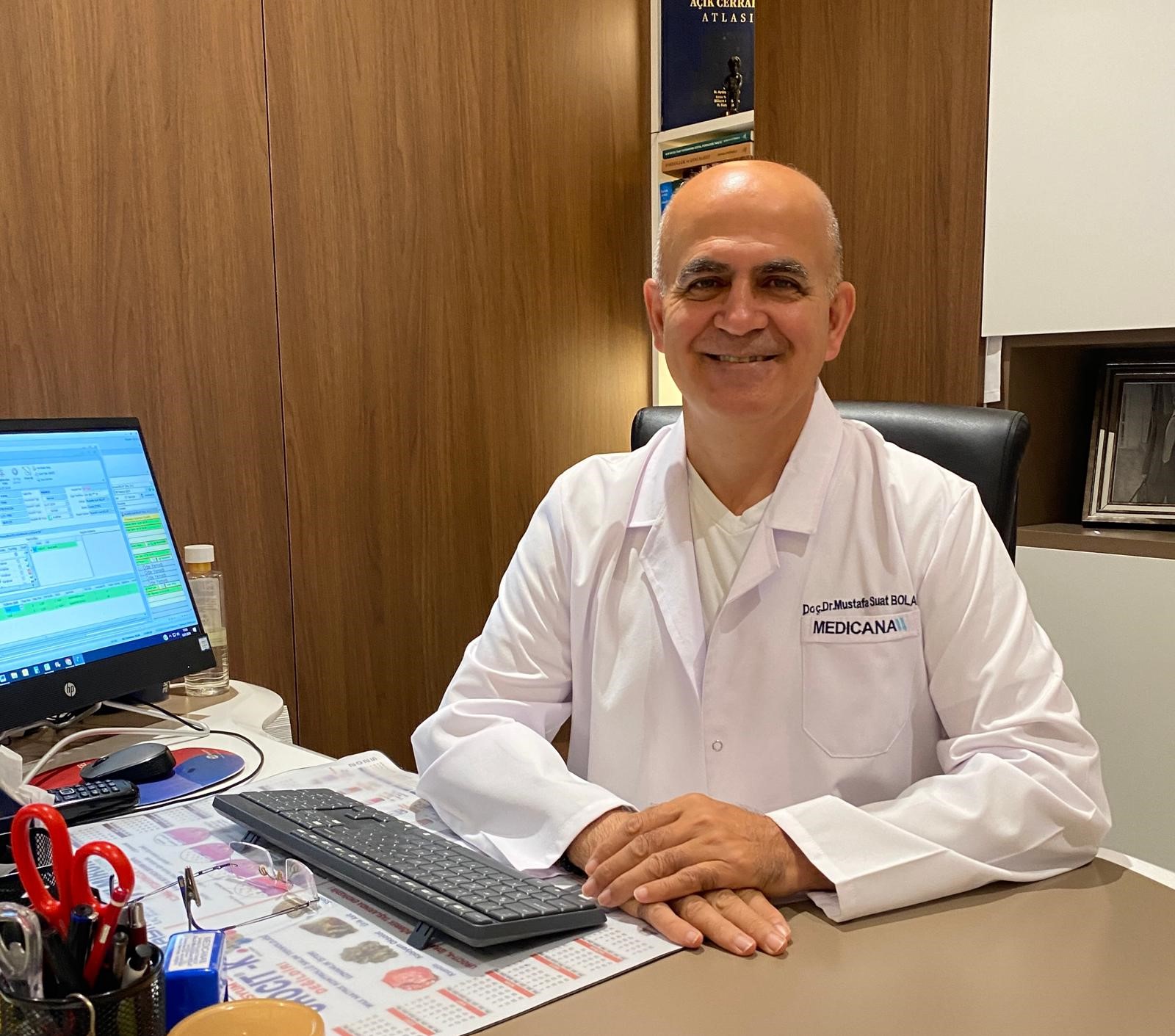
Urology Specialist Assoc. Prof. Dr. Mustafa Suat Bolat said that when prostate cancer is diagnosed early, they can treat almost 100 percent of patients with appropriate treatment.
Prostate cancer draws attention as the most common type of cancer after lung cancer in men. Assoc. Dr. Mustafa Suat Bolat, one of the Doctors of Medicana Health Group, made explanations by mentioning the importance of early diagnosis before September 15 Prostate Cancer Awareness Day. Stating that prostate cancer is one of the diseases that should be prevented, Assoc. Prof. Dr. Mustafa Suat Bolat said, “Prostate cancer is the second most common cancer in men in our country as well as in the world after lung cancer. The prostate is an organ about the size of a walnut in an adult male and one of the secondary sexual organs responsible for ensuring the continuation of the generation. But in patients over the age of 50, it becomes a chronic disease that starts with the formation of a single cancer cell in the prostate and can result in death if no precautions are taken.”
“Nearly 100 percent of prostate cancer diagnosed early can be treated”
Pointing out that early diagnosis and treatment are vital in prostate cancer, Medicana International Samsun Hospital Urology Specialist Assoc. Prof. Dr. Mustafa Suat Bolat said, “Age and genetic predisposition are two extremely important factors in prostate cancer. Normally, we rarely see this disease under the age of 40. But from the age of 50, the risk of this disease in men is gradually increasing. Six out of every 10 patients diagnosed with prostate cancer are aged 65 and over. This means that prostate cancer is a disease of advanced age. However, in some cases, for example in case of genetic predisposition, we encounter prostate cancer at an earlier age. Unfortunately, men whose parents, fathers or siblings have been diagnosed with prostate cancer at different times have twice the risk of cancer. If we diagnose the disease early, we can save almost 100 percent of patients from this disease with early intervention and appropriate treatment. Of course, a critical point is that prostate cancer does not cause any complaints or distress to the patient while it is developing. This is the critical point. It is a disease that progresses secretly and unfortunately, it can progress to the fourth stage without any clinical symptoms until it reaches the end point. In this respect, close follow-up of prostate cancer is very important in our country as in the whole world. We can save almost 100 percent of our patients from prostate cancers that we catch very early when there are no clinical findings.”
“Painless biopsy can be performed”
Stating that a biopsy can be performed painlessly with developing technology and treatment methods, Assoc. Prof. Dr. Bolat said, “It is necessary to physically examine the prostate. And if we encounter a focus suspicious of cancer in the prostate in the examination of the patient with the PSA test, then we definitely go towards the biopsy point. Of course, the most important and most challenging stage of the diagnosis is actually this prostate biopsy. There is a popular belief. It is perceived as the most painful and distressing part. This may have been true until 30 years ago, but nowadays, technological facilities that make this biopsy extremely comfortable have developed and in 98 percent of our patients, we can take the biopsy in the form of a daily procedure and make the diagnosis without disturbing their comfort and without pain with satisfactory rates. Of course, early diagnosis is extremely important. In some patients, we may encounter prostate-related problems such as urination problems, blood in the urine or blood in the semen. When the disease progresses a little further, we may encounter edema in the legs due to the spread of the surrounding tissues, and occasionally bone pain. However, we have the opportunity to diagnose and treat this disease at every stage. For this reason, in suspicion of prostate cancer, the patient must be closely examined and sure about what is inside the prostate.”
Reminding that examinations should not be neglected, Bolat said, “It is not important that patients have no complaints. They should definitely have regular check-ups. It is recommended that patients undergo a prostate examination once or twice a year. The important thing is early diagnosis and early treatment before the problem starts.”
İHA Haber Kodu: 20240914AW287251