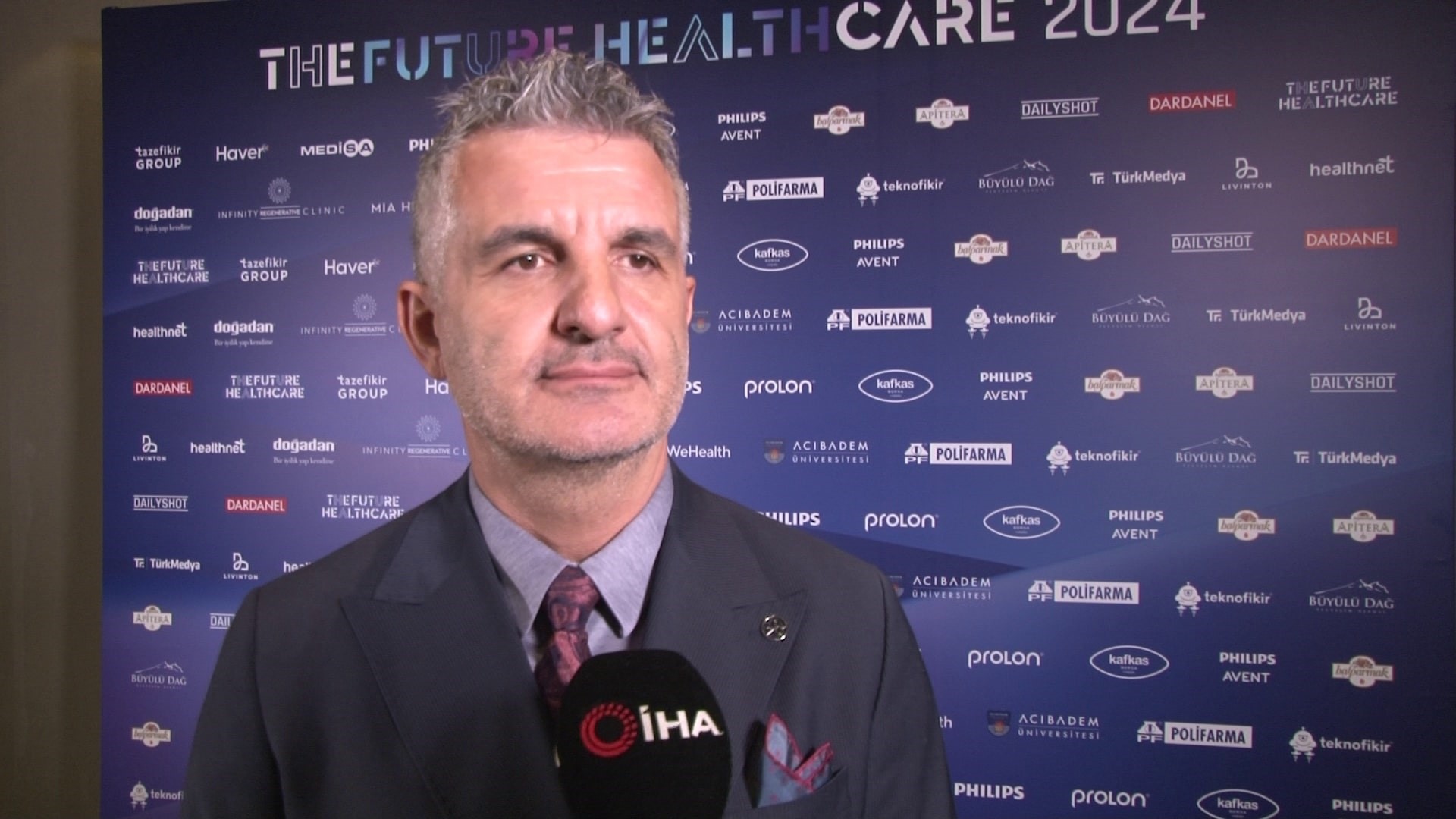
The Future Healthcare Istanbul 2024 International Conference was hosted by Acıbadem University. The 2-day conference brought 80 thousand people together physically and online.
The 5th edition of The Future Healthcare Istanbul 2024 International Conference, hosted by Acıbadem University, was held on October 25-25. The future of the health world and innovations in medicine were evaluated at the conference. At the conference, where the impact of artificial intelligence applications in healthcare services on the sector was discussed, Prof. Dr. Murat Baş, Head of Acıbadem University Faculty of Health Sciences, Department of Nutrition and Dietetics, explained what is curious about the trendy topic of the last period, 'Nutrition Mimicking Hunger'; He emphasized that unlike diets based on 'starvation', it is a system based on 'healthy hunger'.
“The concept of healthy hunger has come to the fore”
Prof. Dr. Murat Baş said, “In fact, nutrition based on ‘staying hungry’ has started to come to the agenda a lot especially in recent years as a result of increasing obesity and diseases such as diabetes and diabetes. It has somehow started to enter our lives due to the long life expectancy. In fact, starvation is not a healthy approach when you do not take any food and drink. Then you can lose muscle, which we never, ever want. In the face of this, we emphasize 'healthy hunger'.”
“We give enough energy and vitamins to mimic hunger”
Prof. Dr. Baş said, “In the nutrition program that mimics hunger, ‘healthy hunger’ is actually practiced. In healthy starvation, we give energy and mineral supplementation as much as physiological activities continue in the body”, and explained the curiosities about this diet as follows:
“'Nutrition that mimics hunger' is a diet that is applied for 5 days and should preferably be applied in 3 periods for 3 consecutive months. On the first day, there is an energy intake of around 1,100 calories and vitamin and mineral intake to meet physiological needs. On the 2nd, 3rd, 4th and 5th days, there is an energy intake of around 800 calories and the intake of vitamins and minerals to meet that need.”
“Nutrition that mimics hunger postpones diabetes”
Prof. Dr. Murat Baş also explained who this diet is suitable for: “Of course, a diet that mimics hunger is not suitable for everyone. Having a healthy metabolism is a primary requirement. Especially in people who have not been diagnosed with diabetes but who are very close to diabetes, it can have very beneficial effects and postpone the disease.” On the other hand, Prof. Dr. Murat Baş stated that this nutritional model can be applied to those with insulin resistance and those who have obesity before and after undergoing a surgical intervention to treat obesity:
“But this dietary model is not suitable for people with type 1 diabetes, that is, people who continue their lives insulin-dependent. It is also not suitable for people over 70 years of age. We also do not recommend it for people with a history of eating disorders and under the age of 18.”
Prof. Dr. Uğur Sezerman: “Medicine of the Future: Personalized Health Solutions with Data Analytics”
Prof. Dr. Uğur Sezerman, faculty member of the Faculty of Medicine, Department of Biostatistics and Medical Informatics, explained the new system they have developed in the field of personalized medicine using artificial intelligence, one of the most common tools of the recent period. Prof. Sezerman's talk titled 'Medicine of the Future: Personalized Health Solutions with Omics Data Analysis Based on Artificial Intelligence' was followed with interest.
Prof. Dr. Uğur Sezerman explained the system they are working on, which they call the medicine of the future, as follows
“When we say personalized health solutions, we mean all the metrics of the person that can be measured in the body. Starting from DNA, your genetic predispositions, starting from RNA, which gene is expressed and how much, how these have changed, or how these changes are changing with what we call epigenetic changes, all these are examined and analyzed. Metabolites, protein levels, their functional status. We can find all this thanks to sequencing technologies. This allows us to determine the patient's health status in full detail. And then it identifies the diseases you may encounter, determines the precautions you need to take to avoid these diseases, and makes suggestions about your lifestyle and dietary habits. In fact, this is a system that emphasizes preventive health and guides the person about what to do to avoid getting sick.”
İHA Haber Kodu: 20241026AW316153