Düzce University Faculty of Medicine Department of Neurology Faculty Member Assoc. Prof. Dr. Burcu Polat underlined that migraine ranks first among the disabling diseases under the age of 50 and stated that one in every 6 people in Turkey has migraine.
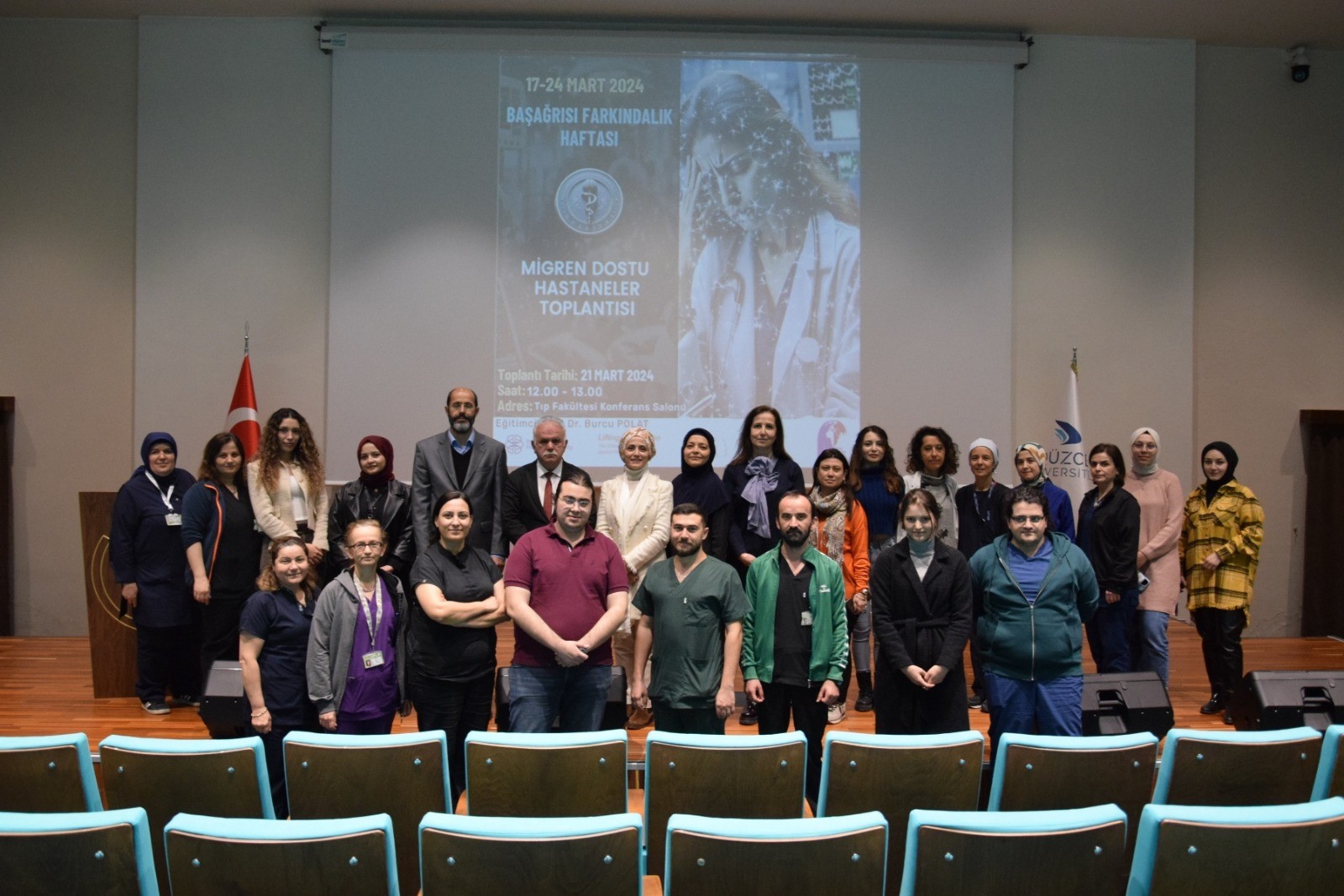
Migraine Friendly Hospitals Meeting organized due to Headache Awareness Week was hosted by Düzce University Faculty of Medicine Hospital.
At the meeting held in the Faculty of Medicine Conference Hall, Assoc. Prof. Dr. Burcu Polat, who started her words by emphasizing that migraine can significantly reduce the quality of life, underlined that migraine ranks first among the disabling diseases under the age of 50. Stating that people do not fully know migraine, Assoc. Prof. Dr. Polat stated that one out of every 6 people in Turkey has migraine.
Support should be sought from a specialist
Stating that low awareness of migraine poses serious problems, Burcu Polat noted that patients prefer to self-diagnose or not seek professional care. Emphasizing that non-specialist doctors often misdiagnose migraine with other diseases such as sinusitis, allergies, cervical pain syndrome, Assoc. Prof. Dr. Burcu Polat said that in 40 percent of cases, unnecessary medical imaging, inappropriate treatments, including radiation exposure.
Stating that according to the results of a recent stigma survey conducted by EMHA, 93 percent of migraine patients think that migraine disease is not well understood by the public, Assoc. Prof. Dr. Polat said that migraine should be managed by clinical experts, go beyond mere prescription of medication and apply a multimodal approach to eliminate stigma in individuals with migraine.
Stating that 25 percent of the society in Turkey is aware of migraine, Assoc. Prof. Dr. Burcu Polat said that those with a family history and those with a high level of education have a high awareness of migraine.
More common in women
Underlining that migraine is much more common in the active years of life, Polat said that it is 2-3 times more common in women than in men. Adding that migraine has a very complex nature, Assoc. Prof. Dr. Polat added that migraine attacks are defined as migraine attacks without aura and with aura. Polat listed the symptoms of migraine without aura (80-85 percent) as headache attacks lasting 4-72 hours, unilateral, throbbing, worsening with movement, moderate or severe, nausea/vomiting, and the symptoms of migraine with aura as visual disturbance, sensory disturbance, speech or language disorders and motor disorders.
Migraine test in three questions
Stating that the diagnostic test of migraine can be done in three questions, Assoc. Prof. Dr. Burcu Polat said, "Did you feel nausea or stomach discomfort with headache? Were you disturbed by light during the headache? Has your work or daily activities been restricted for at least one day because of your headache?" She stated that if two of the questions are answered yes, the risk of migraine is 93 percent. Polat said that the triggers of migraine vary according to the person, but stress and insomnia are the two most common triggers and expressed the importance of being aware of the triggers in terms of preventing attacks. Stating that the most important factor in migraine treatment is a good cooperation with the patient, Assoc. Prof. Dr. Burcu Polat explained the main treatments of migraine as acute attack treatments, preventive treatments and interventional treatments.
Inappropriate approaches in migraine treatment
Underlining cupping, leech, ozone therapy, migraine surgery and herbal medicines approved by the Ministry of Agriculture as inappropriate approaches in migraine treatment, Polat said; "If you have recommended treatments for migraine, do not disrupt them. Do not neglect to keep a pain diary. Eat a healthy diet, do not starve. Drink plenty of water. Awareness in caffeine and alcohol use. Exercise regularly. Do not disrupt your sleep rhythm; neither too much nor too little sleep. Avoid environments that increase your stress. Recognize your triggers and try to manage them as much as possible. Avoid excessive use of painkillers."
Ways to help prevent migraine attacks
Sharing the information that it is necessary to stay still and rest as soon as the pain is felt, Assoc. Prof. Dr. Polat stated that taking painkillers early will ensure a rapid end to the attack. Underlining that applications such as ice gel applications, sleep, essential oils, caffeine, massage-trigger point applications and breathing exercises are methods that help prevent migraine attacks, Polat emphasized that awareness should be raised to minimize the effects of migraine. Informing the participants about migraine-friendly workplaces, Assoc. Prof. Dr. Burcu Polat underlined that many companies in the world that care about employee health and well-being are entitled to become migraine-friendly workplaces by participating in the project. Within the scope of the project, Düzce University Rector Prof. Dr. Nedim Sözbir was presented a "Migraine Friendly Workplace Certificate" by the Global Migraine and Pain Association.
