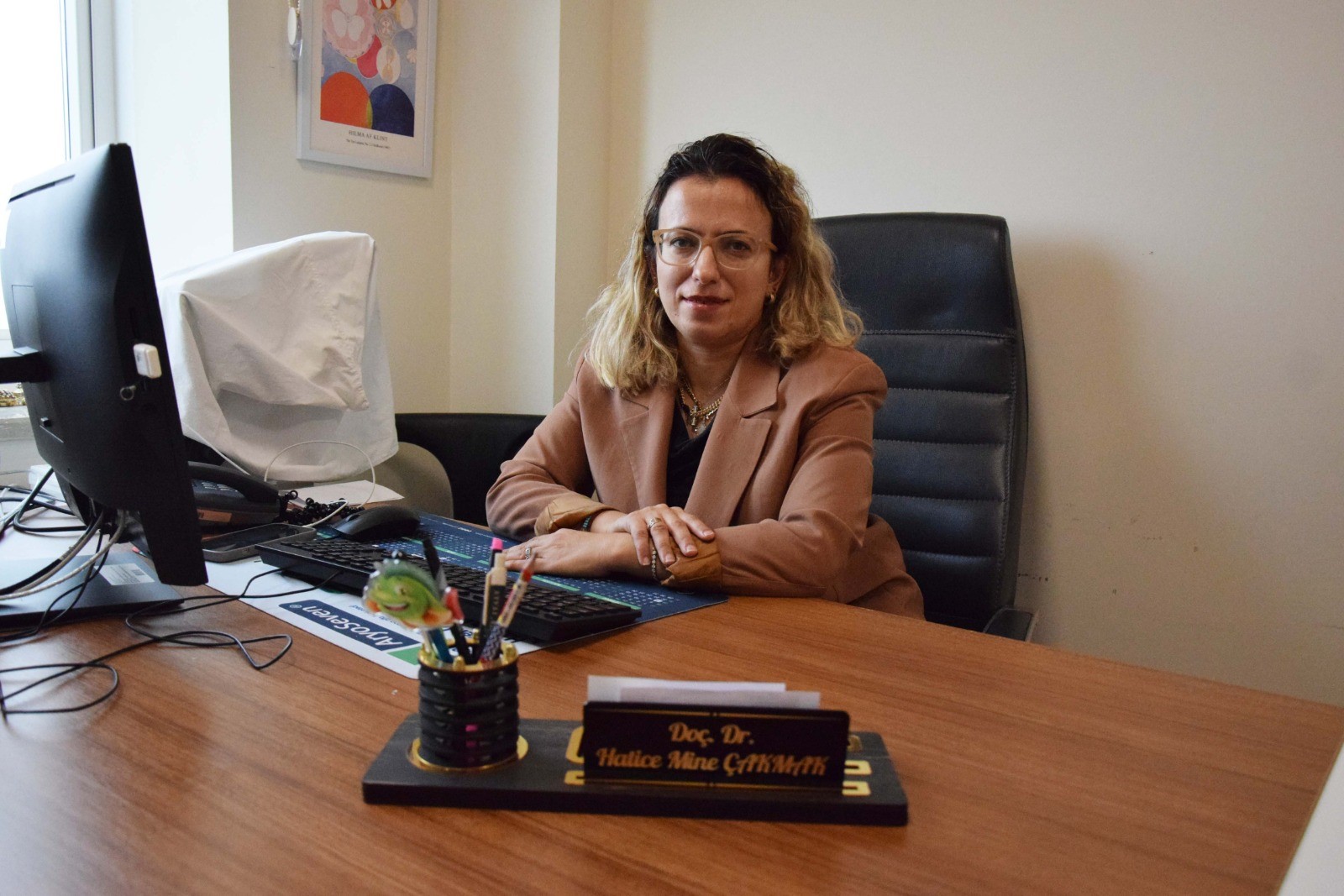
Düzce University Faculty of Medicine, Department of Pediatrics and Department of Pediatric Hematology-Oncology, Assoc. Prof. Dr. Hatice Mine Çakmak made important statements on the occasion of November 2-8 Children with Leukemia Week.
Pointing out that childhood leukemia occurs as a result of malignant infiltration of the bone marrow as a result of uncontrolled proliferation of precursor cells in the bone marrow, Assoc. Prof. Dr. Hatice Mine Çakmak said, “As a result of the invasion of the bone marrow by these malignant cells, the number of cells that produce erythrocytes, white blood cells and platelets is significantly reduced and may disappear. As a result of the inability to produce blood cells, the patient has low white blood cells, low blood platelets and low hemoglobin. As a result of low blood cells, pallor due to anemia, pink spots and bruising on the skin due to low blood platelets, and bleeding from the nose and mouth may occur. Fever may develop due to low white blood cells or may also be due to cancer. Joint pain, knee pain, swelling in the knee, neurological findings in central nervous system involvement, and swelling in the testicle if there is testicular involvement in boys may occur.”
“It is divided into acute and chronic leukemia”
Pointing out that leukemia is divided into acute and chronic leukemia, Hatice Mine Çakmak said, “Acute leukemia can be classified as acute lymphoblastic leukemia (ALL), acute myelocytic leukemia (AML). ALL accounts for 75 percent of all childhood leukemias, AML for 20 percent and chronic myelocytic leukemia (CML) for less than 5 percent. Juvenile myelomonocytic leukemia, chronic myelomonocytic leukemia and chronic lymphocytic leukemia are even less common in children. ALL is divided into B-cell ALL and T-cell ALL. AML is also morphologically divided into 8 types, MO-M7. However, with the prominence of mutations in malignant cells in recent years, AML is also classified genetically.”
“The most common acute lymphoblastic leukemia”
Giving information about the course of leukemia, Çakmak said, “In acute lymphoblastic leukemia, being diagnosed under the age of 1 or over the age of 10, having early T-cell subtype, high white blood cell count at diagnosis, detection of genetic features related to poor prognosis in the bone marrow, residual disease after treatment give an idea about the course of the disease. In acute myeloid leukemia, factors such as subtype, genetic mutations in the cancer cell, treatment response, and previous cancer history negatively affect the course of the disease. Acute lymphoblastic leukemia is the most common acute leukemia.”
Giving information about the diagnostic process of this disease, Çakmak said, “After findings such as the patient's history, physical examination, background and family history, blood values are checked. Peripheral smear is definitely evaluated in every patient. The definitive diagnosis is made by bone marrow aspiration. Bone marrow biopsy is performed in some special cases. Information about the course of the disease or residual disease is obtained from samples taken by bone marrow aspiration, microscopic examination of cells, cell type determination by flow cytometry and genetic studies.”
“These foods are not recommended”
Underlining that the main treatment of leukemia is chemotherapy, Assoc. Prof. Dr. Çakmak said, “Wearing masks outside, increasing hygiene rules and taking infection precautions are of great importance. The diet includes all peeled fruits, boiled and cooked foods. Acidic drinks, pickles, chips and sugary foods are not recommended. Treatment of ALL and AML differs. In ALL, treatment can last up to 2.5 years for girls and 3.5 years for boys, whereas in AML, 6 months of treatment or allogeneic (from another individual) bone marrow stem cell transplantation may be required in case of poor genetic risk factors. During chemotherapy and up to one year after the end of chemotherapy, the child patient can benefit from opportunities such as home schooling as they cannot go to school. Chronic myeloid leukemia differs from acute leukemia. The disease has a chronic phase, proliferation phase and blastic (leukemia-like phase).”
“Childhood cancers are quite favorable compared to adults”
Reiterating that chemotherapy forms the basis of treatment in leukemia, Assoc. Prof. Dr. Çakmak said, “Chemotherapy forms the basis of treatment in leukemia. Compared to adults, childhood cancers are quite favorable, with a survival rate of more than 98 percent depending on various factors, especially subtype and genetic risk factors. In the presence of central nervous system involvement and malignant cells in the cerebrospinal fluid, cranial radiotherapy (head irradiation), intrathecal treatments and frequent chemotherapies come to the fore. Allogeneic bone marrow stem cell transplantation is performed in case of relapse or in the presence of poor risk factors in AML at diagnosis. Chemotherapy can cause short and long term side effects. In the short term, there are side effects such as hair loss, decrease in blood cell values, blood in urine, and effects on the heart, while in the long term, there are side effects such as secondary cancers and heart failure. In chronic myeloid leukemia, imatinib is primarily given as an oral tablet as a targeted treatment in the chronic phase of the disease.”
Pediatric chemotherapy unit has been in service for 6 months
Pointing out that childhood leukemia patients are followed and treated in the Hematology-Oncology Clinic of Düzce University Faculty of Medicine Hospital, Çakmak said, “A pediatric chemotherapy unit was opened in our hospital 6 months ago and over 95 percent of the drugs used in this treatment are available in our hospital pharmacy. We can also provide medicines that are not available in our hospital. We have an isolated room and two beds for the first 33 days. After the first 33 days, we have facilities in the Pediatric Service where children can receive outpatient or inpatient treatment for up to one week.”
“We are working to open a pediatric hematology-oncology service”
Hatice Mine Çakmak, who stated that they have the opportunity to give all medicines to all pediatric cancer patients, not only leukemia, even if they are diagnosed in another hospital, said, “We welcome all children with cancer who live in Düzce and who want to take their medicines at our University to our unit. We are ready to treat all their problems with or without fever. We are also continuing our efforts to open the Pediatric Hematology-Oncology Service in the future.”
İHA Haber Kodu: 20241030AW319203
