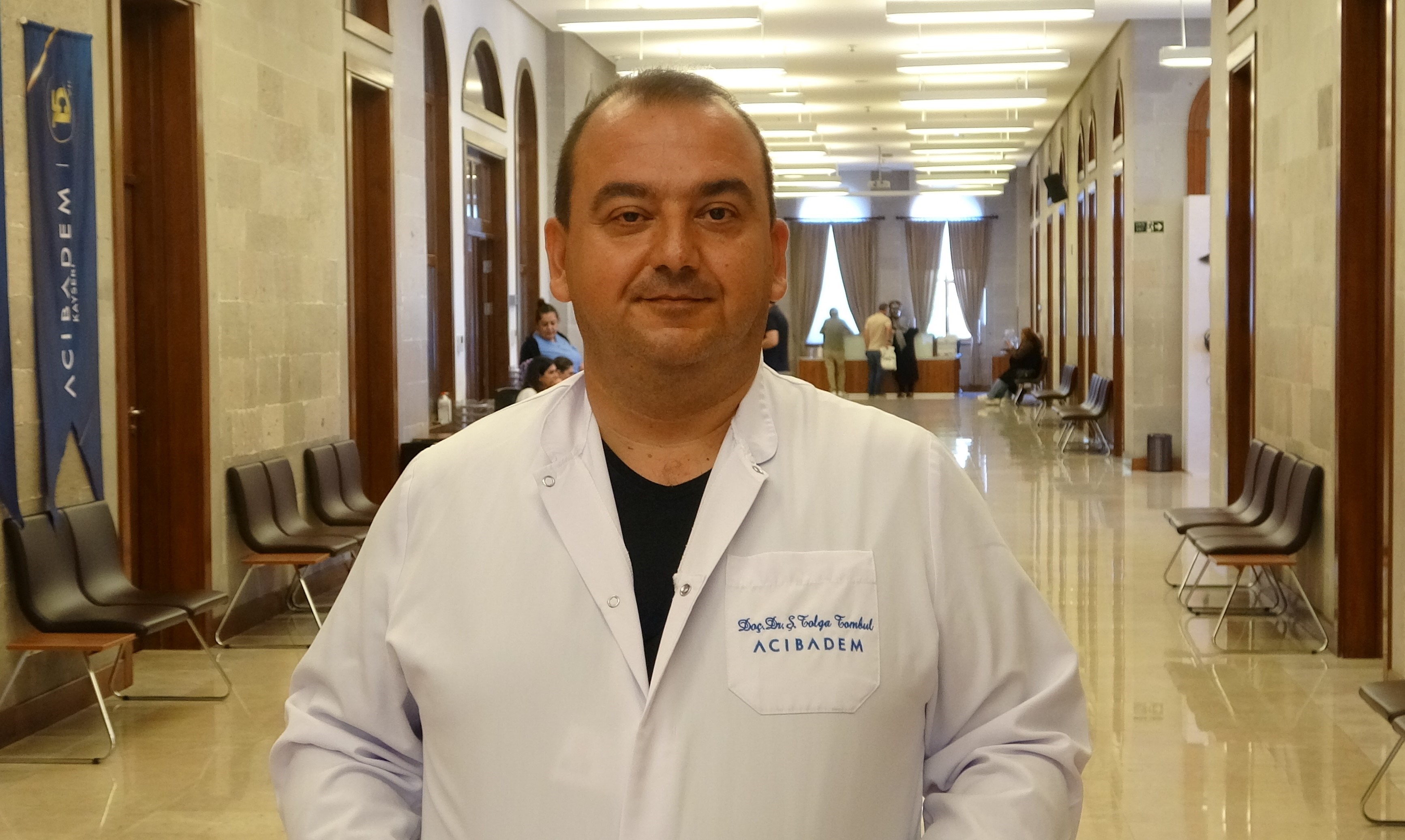
Pointing out that the most common type of cancer in men is prostate cancer, Urology Specialist Assoc. Prof. Dr. Tolga Tombul said, “We recommend prostate examination once a year for cancer screening, especially for men after their 50s.”
Acıbadem Kayseri Hospital Urology Specialist Dr. Tolga Tombul gave important information about the prostate, one of the most common problematic organs in men. Stating that although it usually does not cause symptoms in the early stages, complaints such as urination difficulties and bleeding occur in advanced stages, Dr. Tombul emphasized that treatment success increases with regular checks and early diagnosis.
Underlining that although there is a perception in the society that prostate develops after the 50s, this is not the case, Dr. Tombul said, “A misconception in the society is that prostate develops after the 50s. In fact, the prostate is an organ within the normal anatomy of men. The prostate gradually grows in weight with the release of testosterone starting from puberty. When men reach their 50s, the prostate tissue that surrounds the urinary tract like a handcuff causes problems such as difficulty urinating, frequent urination at night and inability to empty the bladder.”
Pointing out that this growth in the prostate is not always benign, Dr. Tombul stated that it turns into cancerous tissue in 9 to 10 percent of patients. He warned that prostate examination and prostate-specific antigen (PSA) test should be performed once a year for cancer screening, especially for men after their 50s.
“Laser surgeries come to the fore”
During this evaluation process, Dr. Tombul stated that by evaluating the patient's urination complaints, if the patient needs treatment due to prostate enlargement, they primarily give drug treatments, “In patients who do not benefit from drug treatments, we can direct them to appropriate surgical treatments. When we look at appropriate surgical treatments, with the technological developments in the field of laser, 'prostate enucleation', that is, treatment techniques in which the part of the prostate tissue that closes the urinary tract can be removed, come to the fore. Prostate enucleation treatments are an important advantage for the patient as they provide less bleeding, less hospitalization and less catheterization time compared to the old closed surgeries.”
“Pain and bleeding are considerably less with new methods”
Stating that the patient's hospitalization period is limited to 1-2 days after the procedure performed using a high-energy holmium laser device, Dr. Tombul said, “Although there are different methods according to the energy variety used in prostate enucleation treatments, it is the one performed using high-energy holmium laser. In this method, bleeding and postoperative pain are quite low and hospitalization is limited to 1-2 days. The duration of catheterization varies within 1-2 days depending on the disease and the size of the prostate.”
Dr. Tombul stated that if cancer is detected during cancer research, MRI and tomography examinations required for the staging of the disease are also performed and surgical treatment or radiotherapy can be applied if the problem is limited to the prostate. Stating that hormonal treatment and chemotherapy are applied together with medical oncology physicians in advanced stage disease, Dr. Tombul said, “Since the treatment of prostate cancer diagnosed at an early stage will be much easier and more precise, we recommend our patients to come to urology once a year after the age of 50 without delay, without waiting for urinary tract complaints.”
İHA Haber Kodu: 20240919AW290887