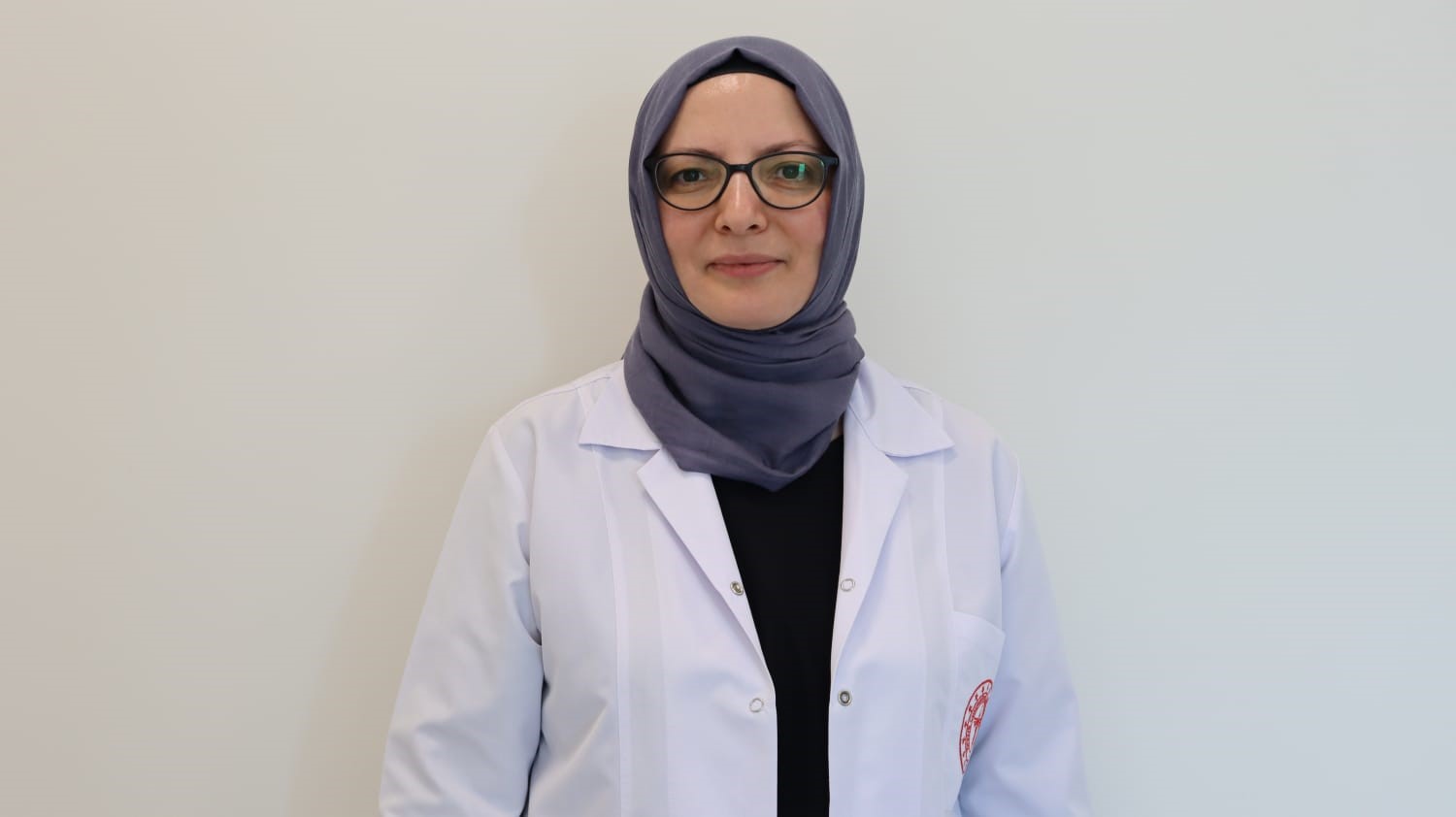
Stating that Alzheimer's disease should be considered if forgetfulness begins in elderly individuals, Neurology Specialist Assoc. Prof. Dr. Cemile Haki pointed out that regular physical activity and Mediterranean type diet prevent the disease.
Bursa City Hospital Neurology Specialist Assoc. Prof. Dr. Cemile Haki made important evaluations regarding the early symptoms, diagnosis and treatment of the disease within the framework of World Alzheimer's Month. Stating that Alzheimer's is a disease that occurs with advancing age and brings personality and behavioral changes along with memory disorders, Assoc. Prof. Dr. Haki noted that Alzheimer's is the most common cause of dementia called dementia by 60 to 70 percent.
Stating that the cause of Alzheimer's disease is not yet clearly known, but some environmental and genetic factors play a role in its development, Assoc. Prof. Dr. Haki said, “It is thought that the risk of Alzheimer's disease increases 2 times every 5 years over the age of 65. If there is Alzheimer's in the family, we see that the risk of Alzheimer's increases by 10 to 30 percent in these people. In addition, some cardiovascular risk factors such as head trauma, high cholesterol, high blood pressure, diabetes and obesity, malnutrition, asocial lifestyle, depression, hearing impairments are thought to cause Alzheimer's disease.”
Referring to the most common symptoms of Alzheimer's disease in the early period, Haki said, “Especially if forgetfulness begins in an elderly person, we should definitely consider Alzheimer's disease. In the early period, complaints of not remembering recent events and difficulty in remembering begin. These people usually start to forget the food on the stove, cannot shop without making a shopping list, or do not go to appointments they have previously made or are late. While there is a problem in forgetting events in the recent 1-2 hour period, we see that they remember events 30-40 years ago more easily.”
Progresses in 3 stages
Pointing out that Alzheimer's disease consists of 3 stages, Haki said, “The mild stage is the stage in which the person generally does not affect his/her daily life, has milder forgetfulness and continues his/her daily life. In the middle stage, the person's complaints increase. They need a little more help. In some patients, there is a disturbance in social relations, such as thinking about things that are not paranoid. In the advanced stage, the patient is now in need of care. There may be some disorders related to urinary, bladder and bowel, inability to understand simple commands, or constant wandering. In the late stage, the patient has become dependent on someone else.”
Physical activity and proper nutrition are essential
Underlining that Alzheimer's disease can be prevented or its course can be changed with some studies, Haki said, “Studies have found that regular physical activity and Mediterranean-type nutrition prevent Alzheimer's disease. Apart from this, social life, some activities that can exercise the brain, regular nutrition, especially in patients with visual and hearing impairment, have been found to delay the development of Alzheimer's disease.”
There is no full treatment
Stating that there is no complete treatment for Alzheimer's disease, Haki continued his words as follows:
“Scientists are working very hard for the treatment of Alzheimer's disease. But unfortunately, there is no complete cure. There are treatments that will only slow its progression and reduce symptoms when symptoms develop. After the development of Alzheimer's disease, the first thing to be done is for a patient to continue social life, especially with friends and family, and to continue activities that will activate and exercise the brain.”
İHA Haber Kodu: 20240920AW291500