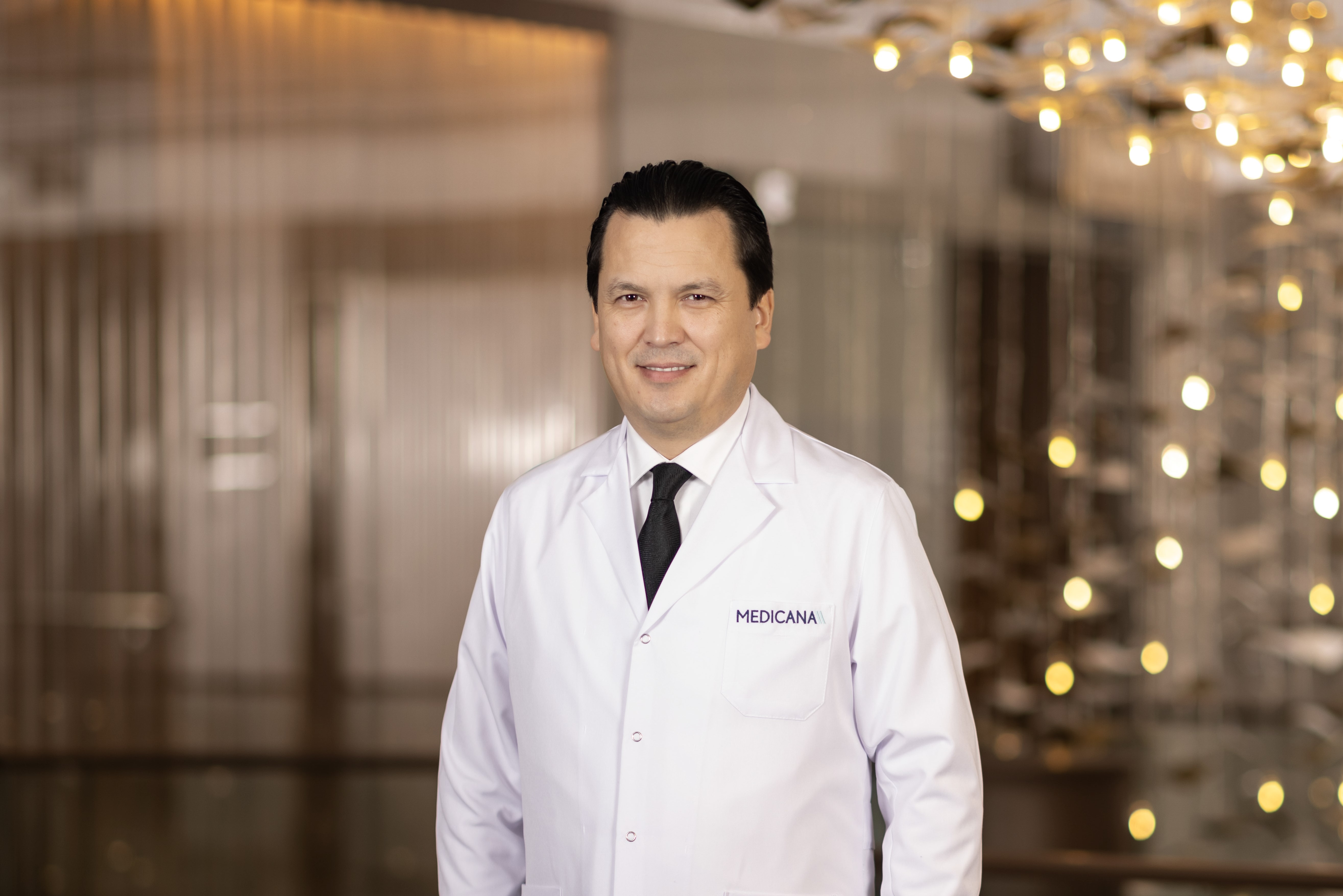
Stating that brain pacemaker therapy is used in the treatment of neurological diseases such as Parkinson's disease, essential tremor, dystonia, obsessive-compulsive disorder (OCD) and some types of epilepsy that cannot be controlled with drugs, Neurosurgeon Prof. Dr. Mete Karatay said, “The electrical impulses provided by this device regulate abnormal signals in the brain and alleviate symptoms.”
Brain pacemaker is a device designed to suppress the symptoms that occur when the functioning of the movement center, which is located deep in the brain and provides control of movements, is impaired. Stating that brain pacemaker surgery is the process of placing this device in damaged areas with special electrodes, Medicana Zincirlikuyu Hospital Brain and Neurosurgery Specialist Prof. Dr. Mete Karatay said, “Brain pacemaker can be applied in Parkinson's disease, essential tremor (tremor) and dystonia diseases resistant to drug treatment within the scope of SSI assurance in our country. Outside of our country, it is used safely and with FDA approval in obsessive-compulsive disease (obsession disease), major depression and epilepsy. It is known that these diseases are caused by over-excitation or under-excitation of the movement center of the brain. It is thought that the brain pacemaker acts by regulating this faulty stimulation.”
Emphasizing that brain pacemaker surgery does not completely eliminate the disease, Prof. Dr. Mete Karatay said, “Although it varies from person to person, an average of 50-70 percent improvement in clinical findings is achieved. After the brain pacemaker surgery, a decrease in the dose of medication used in the majority of patients, and in some patients, complete cessation of medication use can be achieved.”
The treatment process is planned with a multidisciplinary approach
Prof. Dr. Mete Karatay stated that before deciding on brain pacemaker surgery, patients are observed in the neurology outpatient clinic for a while and thus, information about the prominent disease features, benefit from medication and side effects of medication can be obtained. “Patients who are thought to benefit from brain pacemaker surgery are evaluated by a committee consisting of neurology, neurosurgery and psychiatry specialists and a decision is made for surgery. The coordinates of the target nuclei are determined by combining the brain tomography and MR image. In brain pacemaker surgery, electrodes are placed in the target nuclei, which are determined to be unilateral or bilateral depending on the patient's symptoms. Then, these electrodes are connected to the battery fixed under the skin from the chest area with extension cables placed under the skin so that they cannot be seen from the outside, and the surgery is completed.”
Not every patient may be suitable for surgery
The patient is discharged the day after surgery. Battery adjustment is started in the first week. In the following period, patients are called for control at 10-day intervals. After 4-6 weeks, controls are planned to be 1 or 3 months. Stating that rechargeable batteries have been developed for 25 years as a result of the developing technology, Neurosurgery Specialist Prof. Dr. Mete Karatay gave the following information:
“When the battery life is over, the new battery is replaced with the old one with a small operation. In Parkinson's disease, brain pacemaker surgery is not considered appropriate in the first 5 years of good response to medication, in individuals with moderate to severe dementia and serious internal diseases, and in patients over the age of 70. As a result of brain pacemaker implantation, there is a significant reduction in all Parkinson's symptoms, especially tremors and slowing of movements.”
İHA Haber Kodu: 20241104AW322147