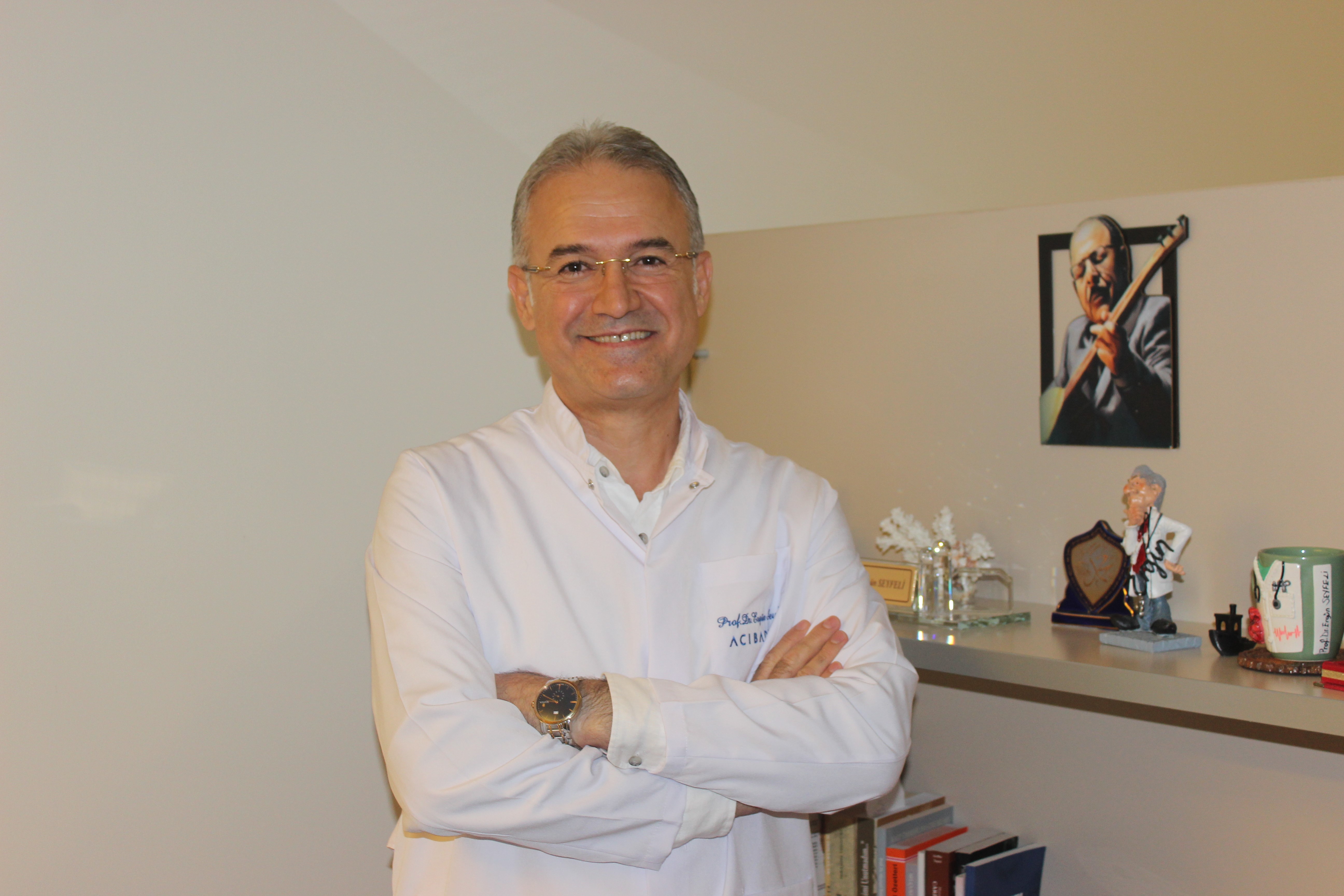
Acıbadem Kayseri Hospital Cardiology Specialist Prof. Dr. Ergün Seyfeli said that the age level in cardiovascular diseases has decreased to 30-35 levels and said, “We can say that heart diseases increased especially during and after the pandemic.”
Stating that it is estimated that approximately 300 million people in the world have heart disease and approximately 2 billion people are at risk of heart disease, Acıbadem Kayseri Cardiology Specialist Prof. Dr. Ergün Seyfeli said, “We can say that cardiovascular diseases are still the number one cause of death in the world. Our country has its share of this and we lose approximately 200-250 thousand people from diseases related to cardiovascular diseases. This means that approximately 1 person out of every 3 people loses his/her life due to cardiovascular diseases. We can say that heart diseases increase especially during and after the pandemic. In previous studies, we see that heart disease usually starts to increase over the age of 40 and peaks between the ages of 50 and 65. However, after the pandemic, we can say that heart attacks have fallen below the age of 40 and have become more frequent in young patients in their 30s and 35s. Covid 19 is a disease that affects the circulatory and respiratory system and causes clotting. During this period, we observed an increase in heart attacks due to clotting. Although the severity of the disease has passed, there are still cases of covit. This increases arteriosclerosis by causing clotting and inflammation-fire in the vessels. Therefore, it appears as an increase in heart attacks, even at a young age,” he said.
“Young patients do not think that they may have a heart attack”
Prof. Dr. Ergün Seyfeli pointed out that in studies conducted in the young patient group, the mortality rate of patients of this age is 30 percent higher when they have a heart attack; “Especially young patients should definitely reach the hospital very quickly when they feel chest pains. The heart attacks of young patients differ from those of adult or elderly patients. Especially in these patients, heart attacks develop acutely as they are mostly associated with clotting and patients are caught suddenly. They also lose their lives due to heart rhythm disorders. In particular, such patients are often unable to attribute the disease to themselves or to think that they might have a heart attack. Therefore, they do not want to go to health institutions much. We especially recommend that our young brothers and sisters who have symptoms of a heart attack should reach the hospital quickly. It is useful to say that intervention in the first hour is life-saving.”
“Heart control is absolutely necessary after the age of 40”
Speaking about the symptoms of heart diseases, Seyfeli said; “They should definitely take into account the complaints of chest pain in the middle region of the heart in a compressive, crushing and weighted style, accompanied by cold sweating, palpitations and shortness of breath. This usually lasts between 5 and 15 minutes. Sometimes it can be short. If this happens once, it means that the second one will definitely come. Complaints over 20 minutes should now be considered as a heart attack and hospitalization is required.”
Stating that 80 percent of heart diseases depend on modifiable risks, Seyfeli said; “We see that 80 percent of heart diseases depend on modifiable risk factors. Diabetics, people with high blood pressure, high cholesterol, smokers, alcohol users, sedentary life and people under stress are generally at risk for heart diseases. We can say that people with advanced age and genetic diseases in the family are at risk of heart disease. People over 40 should definitely have their heart checked. The primary duty of physicians is preventive medicine, that is, we need to prevent heart disease before it happens. Another one is that after it happens, it must be treated early and correctly.” Adding that different methods are used for the diagnosis of heart diseases, Prof. Dr. Ergün Seyfeli said; “We usually try to diagnose heart or vascular disease with Efor, ECG and other methods. Especially in recent years, we have started to use the method we call Tomographic angio, in other words virtual angio, in patients who we cannot diagnose with these methods but we have clinical suspicion. With the virtual angio method, which is an extremely fast and quick method of our patients who we cannot diagnose with the methods we have just mentioned, the diseases of our patients are easily detected at a rate of close to 90 percent.”
İHA Haber Kodu: 20240929AW297498