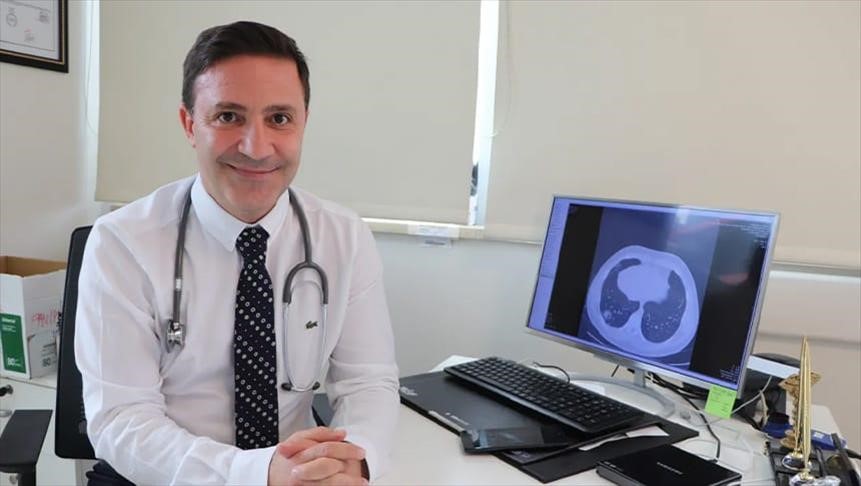
On the occasion of World Clean Breath Day, Altınbaş University Department of Chest Diseases Head Prof. Dr. Şevket Özkaya drew attention to the serious threats of air pollution on human health. Describing air pollution as an “invisible killer”, Özkaya said, “According to World Health Organization (WHO) data, 99 percent of the world's population breathes polluted air that exceeds the guideline limits and this leads to the death of more than 7.5 million people every year.”
World Clean Breath Day, which is celebrated every year on August 5, is commemorated with various activities around the world to draw attention to the importance of respiratory health and raise awareness about the negative effects of air pollution. According to the latest report by the World Health Organization (WHO), more than 90 percent of the world's population breathes polluted air, leading to 7 million premature deaths each year. People living in large cities in particular are exposed to high levels of harmful particulate matter from industrial activities and vehicle traffic, leading to serious health problems such as asthma, chronic obstructive pulmonary disease (COPD) and lung cancer. Recent studies in Turkey show that air quality in major metropolitan areas such as Istanbul and Ankara is above the limit values and a large proportion of the population is living in unhealthy air conditions. World Clean Breath Day provides a critical platform to draw attention to this important public health issue and promote the implementation of clean air policies.
In this context, Prof. Dr. Şevket Özkaya, who gave detailed information about the effects of air pollution on health, also underlined that this pollution reduces human life expectancy by 3-5 years on average and gave warnings.
Clean air is critically important for health
Prof. Dr. Şevket Özkaya drew attention to the importance of World Clean Breath Day and said, “Life begins with breathing and continues with breathing. With each breath, our lungs inhale the atmospheric air in the external environment to provide the oxygen needed by the heart, brain and other organs. In this atmospheric air, we take not only oxygen but also dust, particles and other pollutants into our lungs.” Prof. Dr. Özkaya stated that a person breathes in and out about 20 thousand times a day and breathes about 10 thousand liters of air in this process, pointing out how critical it is for health to breathe clean air.
The invisible killer kills more than 7.5 million people every year
Şevket Özkaya also said that according to World Health Organization (WHO) data, 99 percent of the world's population breathes polluted air that exceeds guideline limits, “This leads to the death of more than 7.5 million people every year. Air pollution is defined as a global threat that plays a role in the pathogenesis of respiratory, cardiovascular, neurological and endocrinological diseases. WHO reports that a 10 g/cubic meter increase in annual PM2.5 concentration increases the overall mortality rate among adults by 6 percent.”
Health impacts of air pollution
Prof. Dr. Özkaya explained the wide-ranging effects of air pollution on health in the following words:
“Air pollution causes many serious health problems, from respiratory diseases to heart disease, neurological disorders, metabolic syndrome and diabetes. There is also research showing that chronic exposure causes obstructive sleep apnea and other sleep disorders.”
“In addition, epidemiological studies show that air pollution increases upper airway symptoms such as runny nose, nasal congestion, laryngospasm and lower respiratory symptoms such as cough, shortness of breath, wheezing. Serious health problems such as asthma, chronic obstructive pulmonary disease, lung cancer, congestive heart failure and stroke are among the main causes of mortality and morbidity due to air pollution.”
The disease of the new age: “Sick Building Syndrome”
Özkaya also gave information about the “Sick Building Syndrome”, which has been defined in the employees of the new age, and stated that indoor air pollution in closed offices or homes causes various health problems. Stating that the symptoms of this syndrome include headache, irritation in the eyes, nose and throat, dry cough, dizziness, difficulty concentrating and fatigue, Özkaya said, “Sick Building Syndrome can be caused by factors such as inadequate ventilation, malfunctioning heating and air conditioning systems.”
Reminding that although building occupants usually experience relief from their symptoms after leaving the building, long-term exposure can lead to permanent effects of neurotoxins, Prof. Dr. Özkaya emphasized that this syndrome is especially common among closed office workers.
Effects on children
Özkaya also mentioned the negative effects of polluted air on children's health and continued his words as follows:
“A study published in the New England Journal of Medicine (2004) revealed how air pollution in southern California damages children's lungs. Children who were exposed to air pollution at the age of development were found to have significantly reduced lung capacity at the age of 18. Although the use of coal for heating has decreased with the widespread use of natural gas in our country, especially in rural areas, coal, dung and combustible materials such as wood in ovens such as tandoor for cooking at home are still used for heating. This pollutes the air we breathe both inside and outside the house and causes us to get sick.”
Plan your life according to air pollution measurements
A 2013 study in China showed that the average life expectancy in northern regions where coal is widely used is 5 years shorter than in the south where coal is not used for heating. In 2015, the Indian government announced that air pollution had caused 35,000 deaths in the last 9 years, and epidemiologists reported that air pollution in India shortened life expectancy by about 3 years. Prof. Dr. Özkaya finally emphasized the importance of monitoring indoor and outdoor air quality and said, “We recommend that you closely monitor the indoor and outdoor air quality you breathe for your children, the elderly and yourself and plan your life according to the regular air pollution measurements made by the meteorology on the occasion of this awareness day.”
İHA Haber Kodu: 20240806AW261694