Prof. Dr. Kaya Süer and Prof. Dr. Özen Aşut, who explained what should be known about the monkeypox virus that alarmed the World Health Organization, stated that the two most effective ways to prevent the spread of the virus are rapid detection and isolation.
The “Mpox” virus, which has recently attracted attention with increasing cases worldwide, continues to maintain its place on the agenda with the World Health Organization (WHO) declaring a “global emergency”. The virus, which causes the disease popularly known as “monkeypox”, was first seen in the African continent, but was detected in many different countries such as Sweden, the United Arab Emirates, Pakistan, Indonesia and the Philippines in a short time.
Prof. Dr. Kaya Süer, Head of the Department of Infectious Diseases and Clinical Microbiology, and Prof. Dr. Özen Aşut, a faculty member of the Department of Public Health, shared important information about the course of the disease and the precautions to be taken.
Stating that the virus was first discovered in monkeys in 1958 and therefore called “monkeypox”, Prof. Dr. Özen Aşut stated that it was first seen in humans in the Democratic Republic of Congo in 1970. “This virus is a disease that is transmitted by close contact and causes skin lesions,” Prof. Dr. Özen Aşut said, ”It is important to avoid contact and be vaccinated for protection.” Stating that the transmission of the virus to healthy people occurs through contact with infected animals (biting, scratching, contact with blood and body fluids, contact with infected animal carcasses) or contact with infected people, Prof. Dr. Kaya Süer said, “It usually heals within 2 to 4 weeks, but in immunocompromised people, this may take longer and may have severe consequences.”
Symptoms appear between 1 and 21 days after exposure to the virus
The disease “monkeypox” has been reported in the DRC for over a decade, with the number of cases increasing every year. In the first eight months of 2024, the number of reported cases exceeded the previous year's total, reaching 15,600. According to the European Surveillance System (TESS), a total of 27,529 cases of Mpox were detected in 46 countries in the European Region, with 12 cases reported in Turkey.
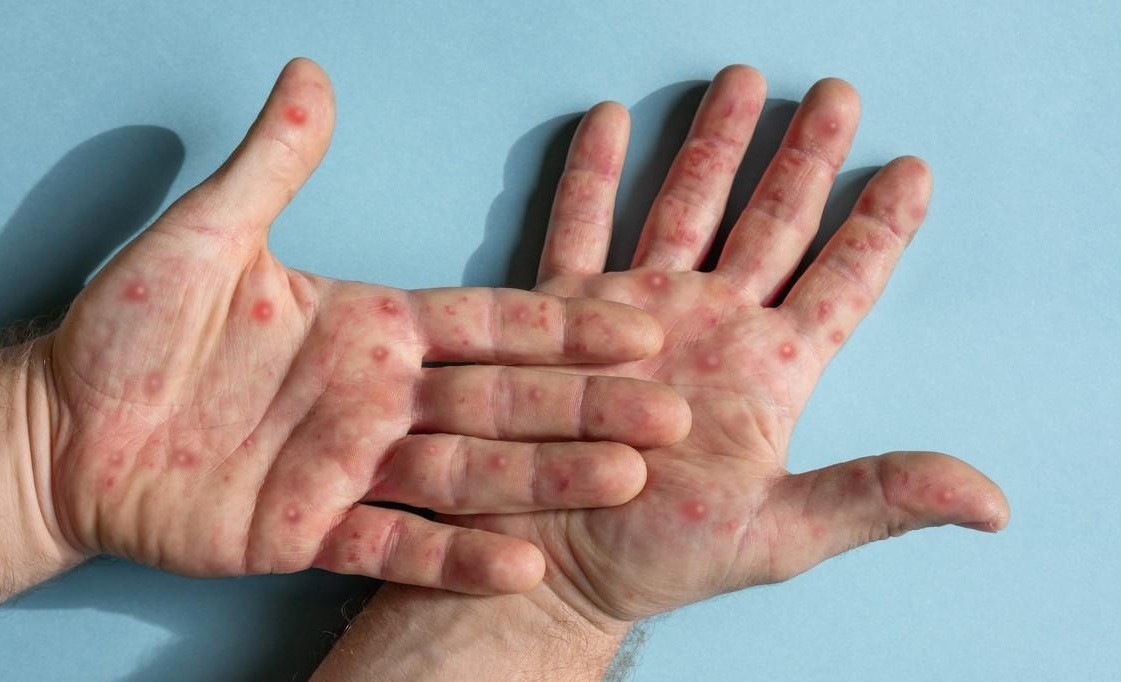
Stating that the disease is usually transmitted through close physical contact with an infected person, Prof. Dr. Özen Aşut stated that sometimes it can also be transmitted through contaminated objects such as clothes or sheets of the infected person, cutting tools used in health services or tools in tattoo parlors. “During the global outbreak in 2022, the virus was usually spread sexually, and people with multiple sexual partners constituted the highest risk group,” Prof. Dr. Özen Aşut said, ”Symptoms appear 1 to 21 days after exposure to the virus. Symptoms include rash, fever, sore throat, headache, muscle and back pain, swollen lymph nodes and weakness. The disease is contagious until the rash is completely healed.”
Starting points of skin rashes; face, arms and legs
Stating that skin rashes begin to appear within 1 to 3 days after the onset of fever, Prof. Dr. Kaya Süer said, “The starting points of the rashes are often seen on the face, arms and legs.”
Stating that since the disease progresses with symptoms, it is not expected to be transmitted from people without clinical findings, Prof. Dr. Kaya Süer said, “People who come into contact with sick people should be followed up for three weeks. It usually shows spontaneous recovery within 2 to 4 weeks. However, this condition has a mortality rate of 1 to 6 percent in immunocompromised people and children.” Prof. Dr. Kaya Süer underlined that virus DNA should be detected using PCR method in samples taken from patients with symptoms to make a diagnosis.
Rapid isolation and strict precautions can reduce the spread of the disease
The aim of treatment is to alleviate symptoms and prevent complications. The antiviral drug “tecovirimat”, approved by the European Medicines Agency, is used to treat Mpox.
WHO recommends avoiding physical contact with people with Mpox and vaccinating groups at risk. Stating that vaccines provide protection against infection and serious diseases, experts underline the need for caution after vaccination. Experts emphasize that the rapid isolation of people with symptoms will significantly reduce the spread of the disease. They also remind that the use of gloves, masks and personal protective equipment by those who will come into contact with sick people plays a critical role in preventing the transmission and spread of the disease.
