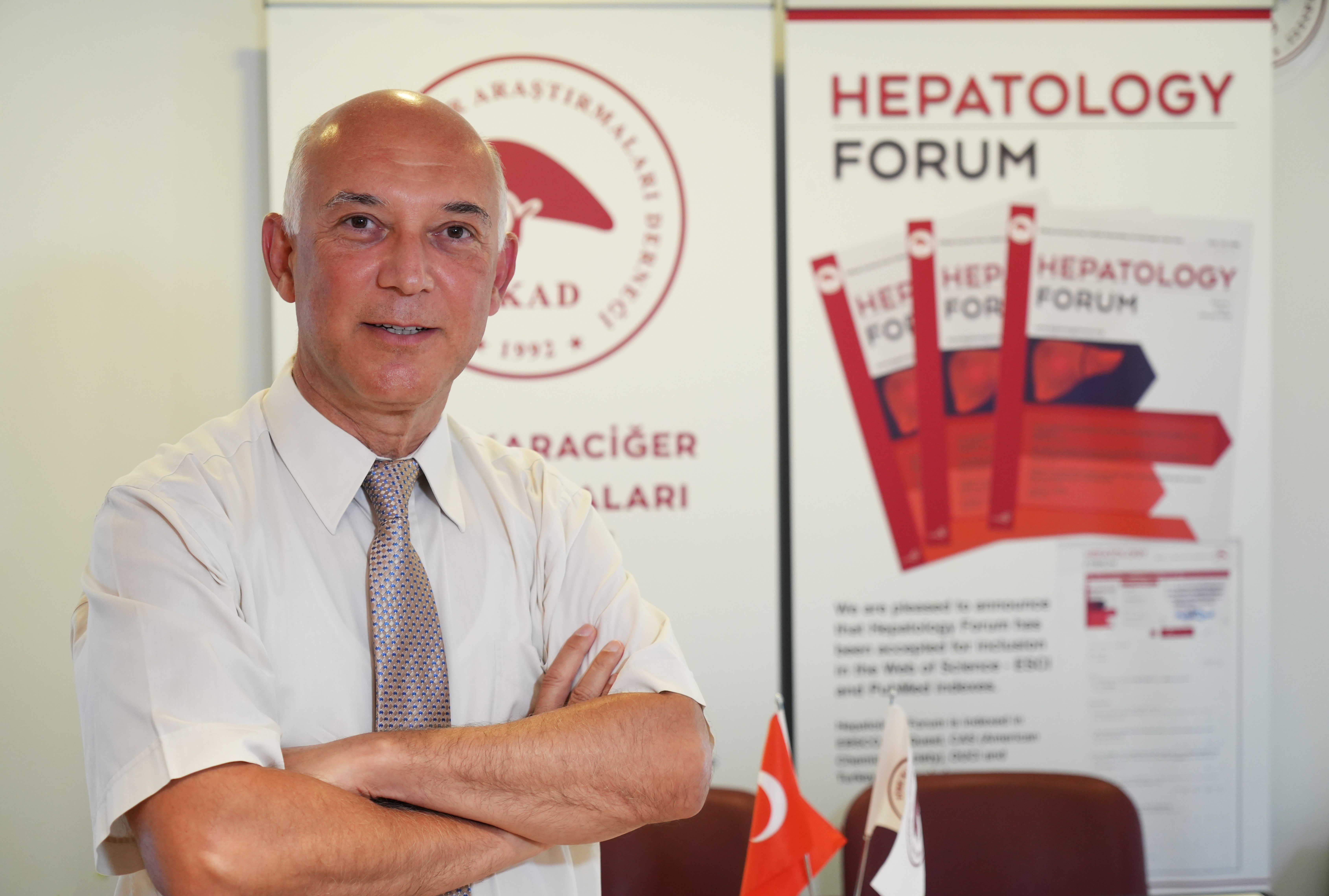
Prof. Dr. Abdullah Zeki Karasu, President of the Turkish Liver Research Association (TKAD), made important statements within the scope of Awareness Day in the Fight Against Viral Hepatitis. Prof. Dr. Karasu stated that they aim to raise social awareness about viral hepatitis, to prevent these diseases with correct information, to ensure early diagnosis and appropriate treatment. Prof. Karasu said, “Viral hepatitis causes the death of 1.3 million people in the world every year.”
The Turkish Liver Research Association (TKAD), which has been active since 1992 to promote and support research on the liver and all related issues in Turkey and has more than 1000 members under its roof, held a press conference within the scope of July 28 'World Viral Hepatitis Awareness Day'. The association, which works to discuss, develop and improve the findings of liver and liver-related researches with many authorized institutions in this field at home and abroad, made statements to raise awareness of “viral hepatitis” this year as it does every year.
Making statements within the scope of World Viral Hepatitis Awareness Day, TKAD President and Ege University Faculty of Medicine, Department of Internal Medicine, Department of Internal Diseases, Division of Gastroenterology Prof. Dr. Abdullah Zeki Karasu drew attention to the issues to be considered and the importance of awareness.
Underlining that the World Health Organization (WHO) declared July 28 as World Viral Hepatitis Awareness Day, Karasu said, “As the Turkish Association of Liver Research, we aim to raise social awareness about viral hepatitis, which is an important health problem for our country, and to prevent, early diagnosis and appropriate treatment of viral hepatitis with correct information.”
“Viral hepatitis causes the death of 1.3 million people worldwide every year”
Prof. Dr. Karasu underlined that viral hepatitis is a virus that directly affects and damages the liver and said, “The way hepatitis is transmitted to humans is different from each other. To date, many hepatitis viruses have been identified. Hepatitis viruses that can cause acute liver failure, chronic hepatitis, cirrhosis or liver cancer in humans are called hepatitis A, B, C, D and E. Viral hepatitis causes 1.3 million deaths worldwide each year, more than the number of people who die from HIV/AIDS and malaria. In two-thirds of deaths due to liver cancer, the underlying liver disease is hepatitis B or C.”
Prof. Dr. Karasu continued his words as follows: “While hepatitis A and E are usually transmitted through contaminated food or water, person-to-person spread is also possible. Hepatitis B, C and D viruses are transmitted by contact with the blood and body fluids of an infected person. These viruses are transmitted both from mother to baby (vertical transmission) and from person to person (horizontal transmission).
Stating that the best prevention method for hepatitis A, B and D is vaccination, Prof. Dr. Karasu said, “There is no vaccine for hepatitis C and E yet. However, when you get the disease, there are therapeutic drugs for all of them with early diagnosis and all drugs used in treatment are covered by the state.”
Prof. Dr. Karasu said, “Vaccination of newborns against Hepatitis B virus (HBV) in Turkey started in 1998. For this reason, although our young population is significantly protected from hepatitis B, the rate of HBV exposure in the adult age group is 30 percent. While some of the people who encounter hepatitis B virus gain immunity, others develop chronic diseases. In our country, 25 million people have encountered HBV and 3 million people have been infected with HBV.”
“Considering that newborn vaccination rates in our country have reached 98 percent, the picture is pleasing”
Pointing out that only 43 percent of newborn babies worldwide receive the hepatitis B birth dose vaccine, Prof. Dr. Karasu said, “Considering that the newborn vaccination rate in our country has reached 98 percent, the picture is pleasing. However, our country has faced a heavy migration burden in recent years. A significant portion of immigrants have been excluded from national viral hepatitis screening and vaccination programs. This situation raises the possibility of an increase in the frequency of viral hepatitis in our country in the near future. For this reason, many of our people can be prevented from getting sick and their lives can be saved by screening the population, including immigrants, for viral hepatitis, increasing the rate of active immunity with vaccines and treating infected people.”
Stating that due to the availability of effective vaccines and therapeutic drugs, WHO aims to control and eventually eliminate viral hepatitis by 2030, Prof. Dr. Karasu noted that Turkey is one of the pioneer countries to implement the 'National Viral Hepatitis Elimination Program'.
Prof. Dr. Karasu concluded his words as follows: “As physicians who have lost many patients to viral hepatitis, under the leadership of the Turkish Association of Liver Research (TKAD) and with the support of our Ministry of Health, our greatest achievement will be to reach and diagnose all of our viral hepatitis patients, cure them and prevent new cases. We do not want to see more deaths from liver disease or liver cancer. The right diagnosis and treatment changes the lives of our patients, enabling them to resume their normal lives and helping them to leave the disease behind. We want to beat cirrhosis and liver cancer.”
İHA Haber Kodu: 20240728AW256031