Warning from the expert: “Robotic knee replacement surgeries have become widespread in knee joint arthritis”
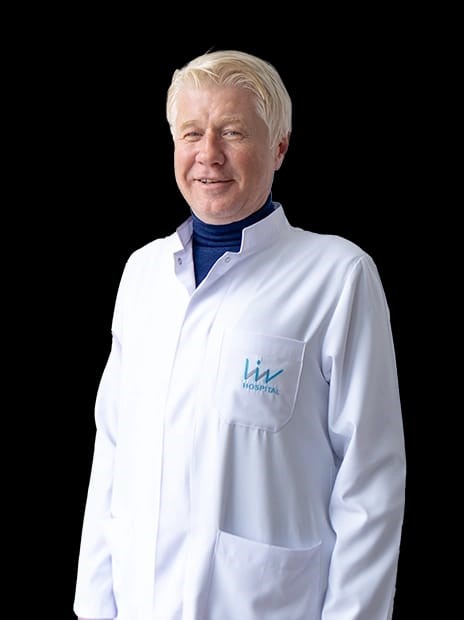
Liv Hospital Ankara Orthopedics and Traumatology Specialist Prof. Dr. Levent Çelebi said, “After America, it has become widespread in Europe and Turkey for about 5 years. After knee prosthesis surgeries performed with both classical and robotic methods, 95 percent of patients' knee pain is relieved.”
Liv Hospital Ankara Orthopedics and Traumatology Specialist Prof. Dr. Levent Çelebi made statements regarding robotic knee replacement surgeries.
He said that knee joint calcification, as it is popularly known, is not actually calcification inside a joint.
Prof. Dr. Çelebi said, “In the medical sense, it is a disease that refers to the deterioration of the cartilage health at the end of the bones that make up the knee joint and the conditions in which the contact of the bone surfaces increases when the cartilage wears out. It is popularly known as calcification. In general, joint calcification patients are also curious. There are situations with certain causes. These can be, for example, joint traumas, injuries, infections, some metabolic diseases. These cause calcification in the joints. But in most patients, we see that it happens at the end of a process. There is actually a kind of aging process. Joint health actually deteriorates in everyone over time. But for some, it can cause difficulties in daily life because it is more severe and faster. Risk factors, gender, unfortunately it is more common in women. It is seen as we get older. Overweight problems or being over normal weight are among the risk factors.”
“The patient's weight is among the reasons”
Prof. Dr. Çelebi said about the symptoms of knee arthritis, “Basically, the symptom that gives the patient the most complaints is knee pain. Especially in the beginning, it occurs with movement. After a while, the movement capacity decreases. It starts as soon as you get up. After a while, it happens at rest. If it progresses further, sometimes there are pains that wake patients up at night. The main complaint is pain. After a while, joint movement limitation develops. Patients' ability to squat decreases. When they sit for a long time and their knees remain bent, the pain may intensify. When we talk about preventive measures, we should pay attention to weight control. After all, this is a biomechanical disorder. Basically, cartilage health deteriorates, cartilage wears out. There is a mechanical side; the knee is a load-bearing joint. Therefore, this is also related to the load it carries. Therefore, the patient's weight, the work he/she does, inactivity cause these.”
Treatment methods
Noting that there are various stages of treatment depending on the severity of the complaint, Prof. Dr. Çelebi said, “The last stage of treatment is to replace the joint surfaces with metal implants, which we call ‘prosthesis’ among the people, when the joint health is completely impaired. The result of this leads to knee replacement surgery. Among the treatment methods, there are classical knee prosthesis and robotic knee prosthesis applications. In both methods, the prosthesis we place inside is the same. The advantages of the traditional method and the robotic method for the surgeon during the operation, the advantages in the early postoperative period and the long-term advantages of robotic surgery are in question. Robotic-assisted knee replacement surgery technique has become widespread in America, then in Europe and Turkey for about 5 years. After knee replacement surgeries performed with the classical method and robotic method, 95 percent of the knee pain of the patients is relieved.”
“Therefore, you can see the result before starting the surgery”
Prof. Dr. Çelebi continued his words as follows;
“Robotic surgery has several advantages. When we perform surgery with the robotic method, less soft tissue and bone cuts are performed. Therefore, there is less bleeding and less pain after surgery. Postoperative rehabilitation of the patient, especially in terms of pain and bleeding, is easier after robotic surgery. This allows the patient to spend the first 1 week-15 days much more comfortable than open surgery. The pain decreases, the return to movement and the hospitalization period is shortened. In addition, a feature of the robotic method that distinguishes it from the classical method is that the robotic arm is activated as a cut guide during surgery. Therefore, it allows us to make precise incisions. Another important advantage is that we normally evaluate patients at rest. In other words, when we take a movie, some people take it lying down, but the best thing we can do is to take a movie while standing and giving load to their knees. Therefore, we only see the patient in that state. The robot gives us this opportunity. There are trackers that we place on the robot patient. It takes instant images with sensors. It also reflects it on the screen through the computer. In other words, the robot shows us both the condition of the patient's knee at rest and the condition, balance, ligament balance and angulation of the knee while the knee is moving. Therefore, while we could not evaluate the condition during movement that actually causes complaints in the past, we can now evaluate it through the robot. Therefore, we can make a surgical plan by taking this into consideration with the robot. The robot can even do this automatically. It tells us, this is the patient's condition at rest, this is the patient's condition during movement. Therefore, I recommend such an operation for you. It offers another advantage. This is the result at the end of this surgery. Therefore, you can see the result before starting the surgery.”
“Prosthesis life is extended by 20-25 years”
Noting that one of the most important problems of prosthetic surgery is the life of the prosthesis, Prof. Dr. Çelebi said, “Another important advantage of robotic surgery is this. The knee prosthesis we place in the patient has a lifespan. After a while, even if it goes without any problems, a loosening problem arises. Prostheses made with the classical method loosen around 15 years on average. Now, with this robot, we can provide a very good soft tissue and bone balance because we can perform surgeries taking into account its balance in full millimetric movement. Biomechanical problems that cause arthritis could also cause loosening over the years. Since the biomechanical balance can be established much better in robotic surgery, the expected prosthesis life is expected to be 20-25 years. Robotic surgery method is applied in many centers in Turkey. There are other centers other than us in Ankara. It is rapidly becoming widespread,” he said.
İHA Haber Kodu: 20241009AW304558