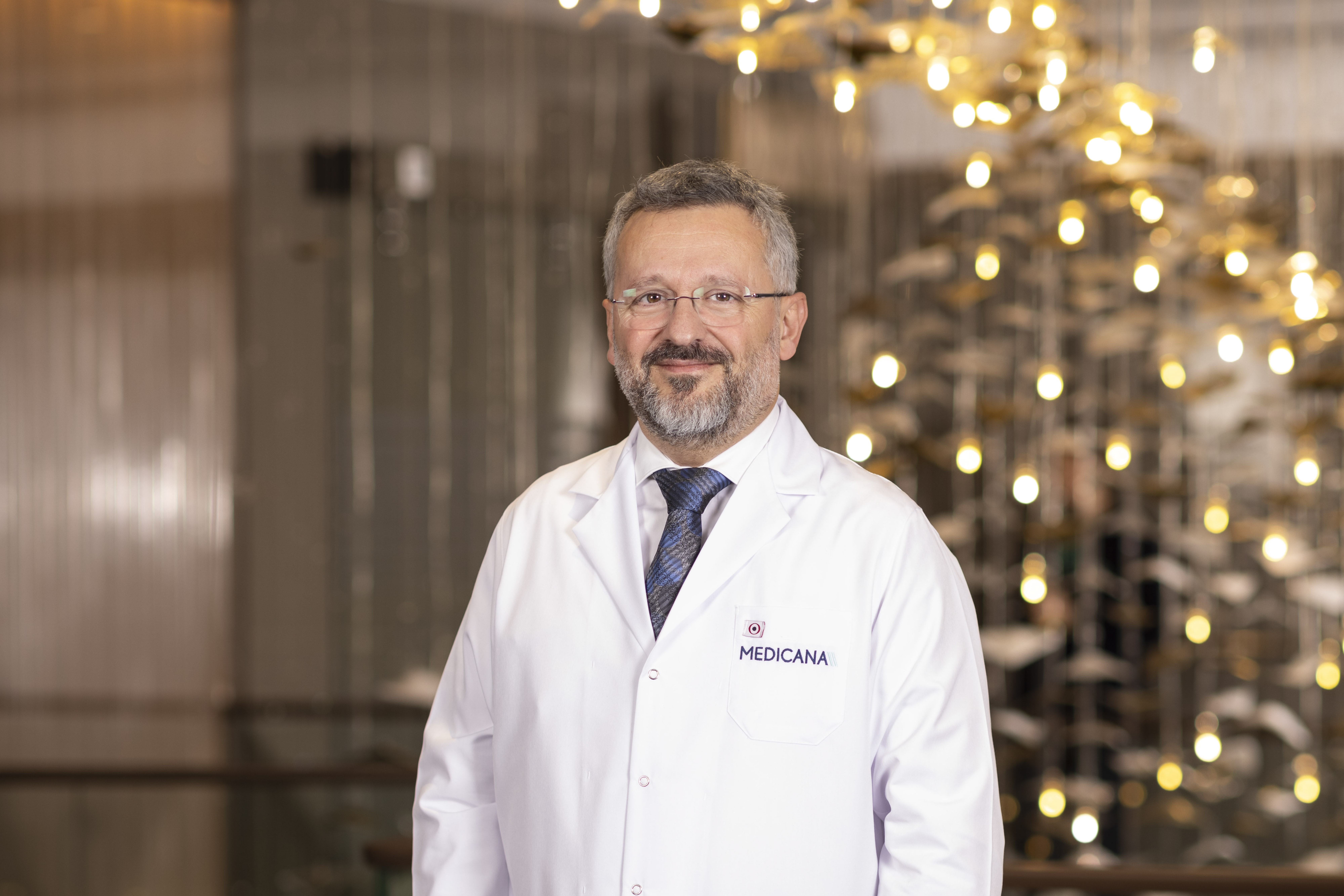
Prof. Dr. Eyüp Murat Ökten from the Department of Cardiovascular Surgery stated that although varicose veins are mostly thought to be an aesthetic problem affecting women, it is actually a serious disease that men also suffer from. “Factors such as genetic predisposition, age, obesity and prolonged standing are important factors that can lead to the development of varicose veins,” he said.
Varicose veins are caused by enlarged veins in the legs. Stating that standing or sitting for a long time is among the important factors in the development of the disease, Prof. Dr. Eyüp Murat Ökten from the Department of Cardiovascular Surgery at Medicana Zincirlikuyu Hospital, drew attention to genetic factors in varicose veins and said, “People with varicose veins in their families, mothers and fathers have a high potential to develop varicose veins. Patients with varicose veins usually present with complaints of pain in their legs and prominent veins. Other symptoms of varicose veins are feeling of heaviness in the legs, cramps especially at night, swelling in the legs at the end of the day, itching and pressure on the veins, blue or purple, curved and bulging veins on the skin surface.” he said.
Risk of clot formation should be monitored
Stating that varicose veins are diagnosed with color doppler ultrasonography, Prof. Dr. Eyüp Murat Ökten said, “In this imaging method, the rates of expansion in the veins and reflux rates called backward escape are important.” Stating that varicose veins are divided into 6 categories according to clinical classification, Prof. Dr. Ökten explained the stages of the disease as follows:
“The first stage does not yet cause direct health problems, but it is a risky situation because it is a progressive disease. The first stage can turn into the second, third and fourth stages over time. In the fifth or sixth stage, chronic venous insufficiency characterized by ulcer formation occurs. Such ulcers are caused by impaired blood flow to the skin and subcutaneous tissue. In advanced stages of the disease, deep vein thrombosis (DVT), which can lead to pulmonary embolism, can occur as a complication. These are very serious diseases that can be prevented with timely treatment. It is important to monitor and prevent the risk of clot formation in people with varicose veins. For this reason, we recommend consulting a specialist physician as soon as the first symptoms appear.”
“Varicose veins larger than 5 millimeters can cause pain and swelling”
Prof. Dr. Eyüp Murat Ökten said that varicose veins are radiologically classified in 4 categories and that these classifications help in assessing the severity of the disease and treatment planning. Prof. Dr. Ökten gave the following information:
“In microvascular varices, thin veins and telangiectasias (small vein dilatations) are seen. They are usually superficial and may be mildly symptomatic. Small varices are superficial veins 3-5 mm in diameter. There are usually no obvious symptoms but may cause aesthetic concerns. Large varicose veins are varicose veins larger than 5 millimeters and show more obvious signs of venous insufficiency. At this stage, pain, swelling and other symptoms may occur. Complicated varicose veins are the stage where symptoms of chronic venous insufficiency are evident, skin changes, ulcers and other complications are seen.”
Varicose veins can be completely removed after surgery
“Generally, the methods applied in the treatment of patients are medication and compression stockings. If there is severe reflux and enlargement of the vein diameter, if the patient has enlarged veins called pake visible from the outside, the treatment of these patients is performed by surgical methods.” Prof. Dr. Ökten continued as follows:
“Closed methods have been used in the surgical treatment of varicose veins for the last 15 years. Patients can be treated surgically with a method called endovenous radiofrequency and a drug treatment with adhesive properties called Glue treatment (vein gluing treatment). Since the scars are small in operations performed with closed methods, patients can recover in a shorter time. Patients who can be discharged on the evening of the day of the operation can return to their daily lives within 1-2 days. After treatment, the appearance of varicose veins is completely removed.”
